
Table of Contents
- Energy Efficient Home Upgrades for Resale Value: What Actually Pays Back
- Start With a Home Energy Audit Before Selling
- HVAC Replacement Before Selling a House: When It Makes Sense
- Energy-Efficient Windows and Resale Value: What Buyers Notice
- Insulation Upgrades for Home Value: The Hidden Payback
- Prioritizing Upgrades by Budget, Timeline, and Climate
- Upgrades That Rarely Pay Back Before a Sale
- Frequently Asked Questions
Last Updated: October 4, 2026
Energy Efficient Home Upgrades for Resale Value: What Actually Pays Back
Energy efficient home upgrades for resale value work best when they cut a buyer’s monthly costs, not when they simply sound green on a listing sheet. At Anthony & Son Indoor Air Quality, LLC, we work on heating and cooling systems across Maryland, Washington, DC, and Northern Virginia every week, and the pattern is consistent: buyers pay attention to documented savings, not marketing claims.
That distinction matters more than most sellers realize. A new furnace with no paperwork behind it is a talking point. A new furnace with a clean energy audit and a decade of lower utility bills is a negotiating asset.
Below, we break down which upgrades tend to return money at closing, which ones rarely do, and how to sequence projects when you have a limited budget and a listing date on the calendar.
The upgrades that hold value at resale are the ones a buyer can verify: documented efficiency ratings, inspection reports, and utility history. Unverifiable “green” claims rarely move an offer.
Start With a Home Energy Audit Before Selling
A home energy audit before selling is the cheapest way to find out which upgrades are actually worth doing. A certified auditor tests your home for air leaks, insulation gaps, duct losses, and equipment performance, then hands you a prioritized list.
Most sellers skip this step and guess. That is a mistake. Audits typically cost far less than any single upgrade on this list, and they prevent you from spending money on the wrong project. You may discover your ductwork is leaking conditioned air into the attic, which makes a new HVAC system perform worse than the old one it replaced.
A few things a good audit will surface:
- Where air is escaping through gaps around windows, doors, and rim joists
- Whether attic and wall insulation meet current recommendations
- How much conditioned air your ductwork loses before it reaches a room
- Whether your heating and cooling equipment is sized correctly for the house
The audit also gives you documentation. When a buyer’s inspector asks why the home is efficient, a dated audit report answers the question better than anything you could say at a showing.
HVAC Replacement Before Selling a House: When It Makes Sense
HVAC replacement before selling a house makes sense when the existing system is near the end of its service life, has a repair history, or fails a buyer’s inspection. If your system is 15 years or older, a buyer’s inspector will flag it, and that flag becomes a negotiating chip against you.
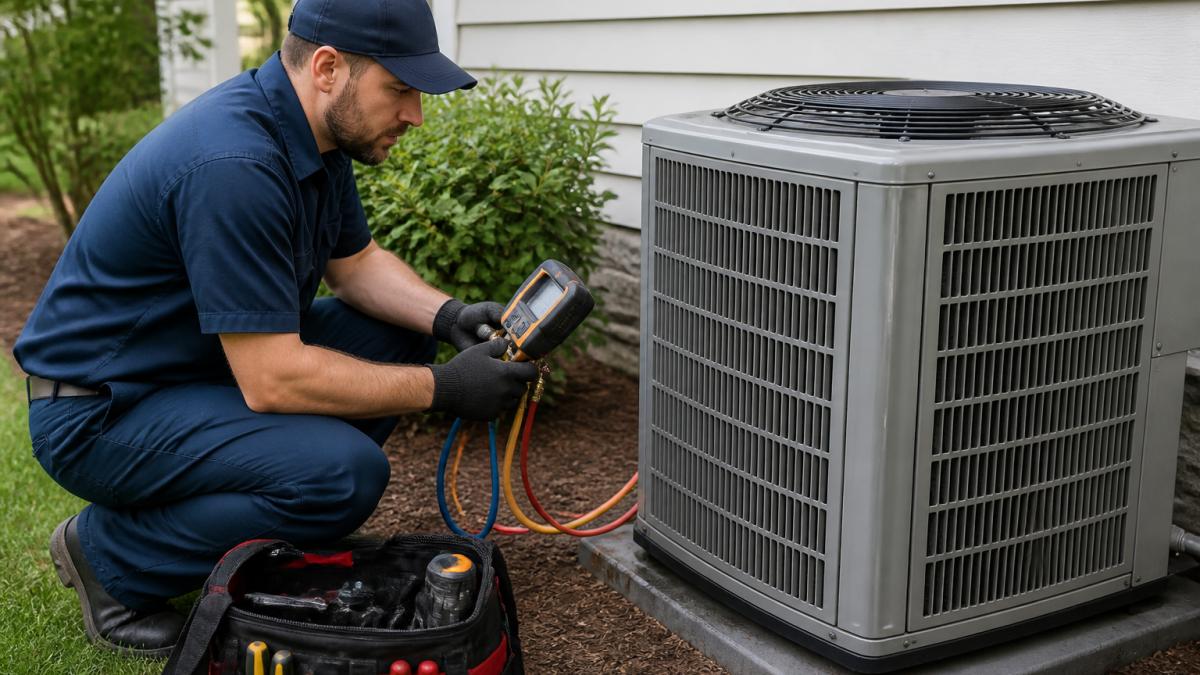
That said, replacement is not automatic. A well-maintained 12-year-old system with clean service records can pass inspection without issue. The decision comes down to condition, not the calendar.
Repair vs. Replace: How to Decide
Repair if the system is under 10 years old, the repair is a single component, and the unit has been maintained on schedule. Replace if you are facing a major failure, the system uses outdated refrigerant, or you have already paid for two or more repairs in the past two years.
One more factor: buyers ask for service history. A documented maintenance record from a certified technician reassures them in a way a verbal promise never will. If you are weighing this decision, our team at Anthony & Son Indoor Air Quality, LLC can inspect the system and give you a straight answer rather than a sales pitch.
Energy-Efficient Windows and Resale Value: What Buyers Notice
Energy-efficient windows and resale value connect through comfort, not just numbers. Buyers notice drafts, condensation between panes, and street noise during a showing. Windows that fail those tests raise doubts about the rest of the house.
Full window replacement is expensive, and it rarely returns its full cost at resale. Partial replacement is often the smarter play. If two or three windows in the main living areas are fogged or leaking, replacing just those can improve how the home feels without a full-house bill. Prioritizing these targeted improvements allows you to allocate your budget toward other structural necessities, such as evaluating how roof replacement benefits the overall marketability of your property.
What buyers actually check:
- Whether windows open, close, and lock smoothly
- Whether there is visible condensation or rot around frames
- Whether the listing mentions efficiency ratings
- Whether the home feels drafty near the glass
If your windows are in decent shape, air sealing and weatherstripping around them deliver a surprising share of the benefit at a fraction of the cost.
Insulation Upgrades for Home Value: The Hidden Payback
Insulation upgrades for home value pay back quietly. They are invisible in listing photos, but they show up in utility bills, and buyers in colder markets ask about them.
Attic insulation is the usual starting point. Heat rises, and an under-insulated attic lets it escape all winter. Adding insulation there is one of the least disruptive upgrades you can make before a sale, and it pairs naturally with air sealing.
Where sellers go wrong is treating insulation as a cosmetic fix. It is not. The value comes from the utility history it produces. If you insulate in spring and list in fall, you have a full cooling season of lower bills to show a buyer. That documented savings matters more than a claim about R-value.
Skipping air sealing before adding insulation wastes much of the benefit. If warm air escapes through gaps in the attic floor, more insulation on top does not stop the leak. Seal first, then insulate.
Prioritizing Upgrades by Budget, Timeline, and Climate
Prioritization is where most sellers lose money. The right order depends on three variables that interact: how much you can spend, how long you have before listing, and what the local climate and housing stock reward. A ranked plan beats an undifferentiated list every time.
Rank Projects by Budget Tier
Think in tiers, not individual line items. Each tier assumes you complete the tier below it first.
- Under $500: Energy audit (often subsidized or free through utility programs), air sealing with caulk and foam, weatherstripping, LED bulb swap, HVAC filter replacement, and a professional tune-up. These are the highest ratio of documented savings to dollars spent, and every one of them shows up in a utility bill.
- $500-$3,000: Attic insulation top-off, duct sealing, smart thermostat, and targeted window repair (glazing, sash, and weatherstripping rather than full replacement). This tier is where most sellers get the strongest verifiable payback before a sale.
- $3,000-$10,000: Partial window replacement in main living areas, HVAC component replacement (blower, condenser, or furnace depending on failure point), and crawlspace or rim-joist insulation. Reserve this tier for systems a buyer’s inspector will flag.
- $10,000+: Full HVAC replacement, full window replacement, or solar. Only justified when the existing system has failed or is at end of life, because payback periods stretch past a typical sale window.
Match the Plan to Your Sale Timeline
Timeline changes which projects are even worth starting, because some upgrades only pay off if you have a full season of utility history to show.
| Timeline Before Listing | Priority Upgrade | Why It Matters |
|---|---|---|
| 6+ months | Energy audit, then insulation and air sealing | Produces utility history you can show buyers |
| 3-6 months | HVAC tune-up or replacement if failing | Addresses the most common inspection flag |
| 1-3 months | Air sealing, weatherstripping, LED lighting | Low cost, quick, visible comfort gains |
| Under 1 month | HVAC service and filter replacement | Prevents surprises during buyer walkthroughs |
A project that takes six months to show up in a utility bill is wasted if you list in eight weeks. Sequence accordingly.
Adjust for Climate and Local Housing Stock
Climate and the surrounding housing stock change which upgrades buyers actually value. A few patterns hold across markets:
- Cold-winter climates: Insulation, air sealing, and heating efficiency carry the most resale weight. Buyers in these markets often ask for heating bills directly.
- Hot, humid climates: Cooling performance, humidity control, and duct sealing in unconditioned attics matter more. A leaking duct system in a hot attic can lose a meaningful share of conditioned air before it reaches a room (Unvented, Conditioned Attics – Building America Top Innovation).
- Mixed climates: Balance both sides rather than maxing out one. A home that performs well in summer and winter reads as well-maintained to a wider pool of buyers.
- Older housing stock: Air sealing and duct work usually deliver more than equipment swaps, because the envelope is the weak point. Newer construction often has the opposite problem, tight envelope, undersized or poorly commissioned HVAC.
Rank by What a Buyer Can Verify
When two projects cost the same and both are plausible, choose the one with documentation. An audit report, a utility bill comparison, or a commissioning sheet from a certified technician converts an upgrade into a negotiating asset. An upgrade with no paperwork is a talking point. If you have a tight budget, start with the audit, it tells you which of these tiers actually applies to your house instead of guessing.
Upgrades That Rarely Pay Back Before a Sale
Not every efficiency project returns money at closing, and sellers should know which ones to skip. Full window replacement, solar arrays with long payback periods, and whole-home geothermal conversions rarely recoup their cost in a quick sale. They may add appeal to the right buyer, but you should not count on it.
The common thread: upgrades with long payback periods reward the person who stays in the home, not the person who sells it. If you are listing within a year, put your money into projects a buyer can verify and benefit from immediately.
For the heating and cooling work on your list, that means a system that performs and paperwork that proves it. Anthony & Son Indoor Air Quality, LLC handles HVAC repair, replacement, preventative maintenance, and indoor air quality service for homes and businesses across Maryland, Washington, DC, and Northern Virginia. Our technicians are certified, our pricing is transparent, and we tell you when a repair is the honest answer instead of a replacement.
Selling a home with an aging HVAC system puts you in a tough spot: buyers see risk, and inspectors confirm it. Anthony & Son Indoor Air Quality, LLC can assess your system, document its condition, and handle tune-ups, repairs, or full replacement so the equipment becomes a selling point instead of a bargaining chip.
Frequently Asked Questions
Which energy efficient upgrades add the most value to a home?
HVAC system upgrades, insulation, and air sealing consistently rank among the highest-return energy efficient upgrades. These improvements lower utility costs, which buyers can verify through energy bills or an audit report. Windows and roofing also help, though their payback often comes through buyer appeal and durability rather than immediate dollar-for-dollar return. Prioritize projects that fix comfort problems buyers will notice during a showing, such as uneven heating or drafty rooms.
Is replacing an HVAC system before selling worth it?
It depends on the system’s age and condition. If your furnace or AC is near the end of its service life and buyers’ inspectors flag it, replacing it before listing can prevent price negotiations or lost offers. A newer, higher-efficiency system also gives you a concrete selling point. However, if the system still runs reliably, a tune-up and documented maintenance record may be enough. An HVAC contractor can tell you whether repair or replacement makes more sense for your timeline.
Do energy-efficient windows increase resale value?
Windows contribute to resale value mainly through curb appeal and buyer perception rather than a guaranteed dollar return. Buyers in older homes often ask about window age, drafts, and condensation. New energy-efficient windows can reduce outside noise, improve comfort, and lower cooling costs, all of which support your asking price. The return varies by climate and home style, so weigh window replacement against insulation and air sealing, which often cost less and deliver comparable comfort gains.
How can I make my home more energy efficient before selling?
Start with a professional home energy audit to identify where your home loses air and wastes energy. Then address the biggest problems first: air sealing around doors and windows, adding attic insulation, sealing ductwork, and servicing or replacing your HVAC system. Swap remaining bulbs for LEDs and install a programmable thermostat. Keep receipts and audit reports so you can show buyers documented improvements, which supports both your asking price and their confidence in the home’s efficiency.