
Table of Contents
- Heat Pump Efficiency vs Furnace: 2026 Comparison at a Glance
- Heat Pump Efficiency Ratings (SEER2 and HSPF2) Explained
- Furnace Efficiency: AFUE Ratings and Combustion Performance
- Federal Tax Credits for Heat Pumps 2026: What Homeowners Qualify For
- Dual Fuel Heating System Benefits: A Hybrid Approach
- Operating Costs and Energy Savings: Heat Pump vs Furnace
- Installation, Lifespan, and Maintenance Considerations
- Which System Fits Your Home? Decision Framework
- Frequently Asked Questions
Last Updated: September 16, 2026
Heat Pump Efficiency vs Furnace: 2026 Comparison at a Glance
The heat pump efficiency vs furnace 2026 debate comes down to one number: how much heat you get per unit of energy you pay for. Heat pumps routinely hit 300% to 400% effective efficiency because they move thermal energy instead of burning fuel, while the best gas furnaces top out near 99% AFUE.
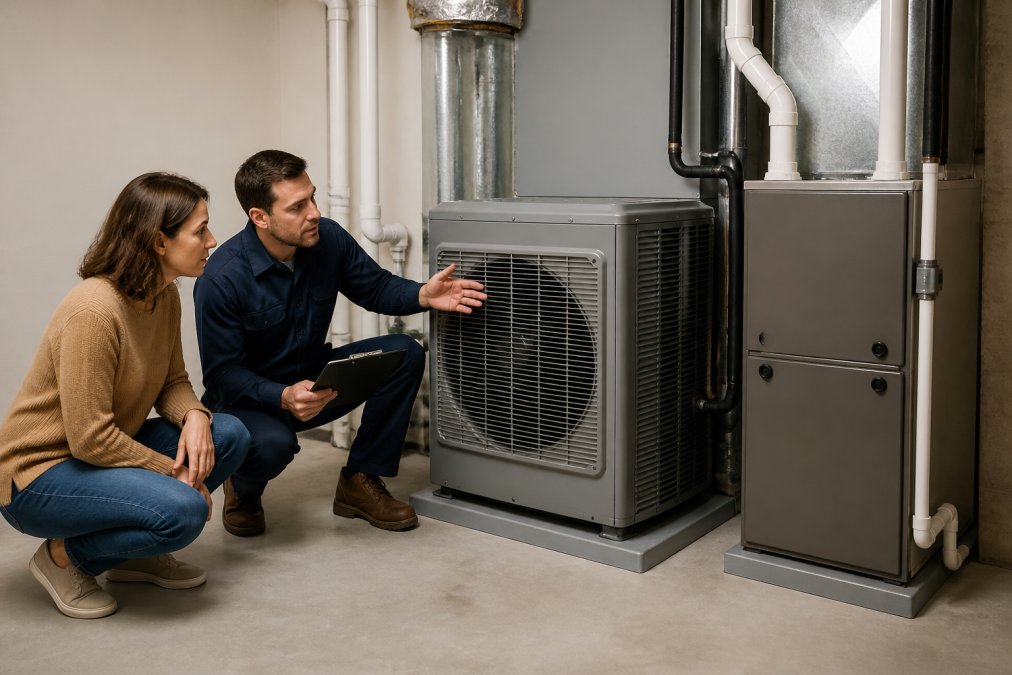
| Factor | Heat Pump | Gas Furnace |
|---|---|---|
| Efficiency Metric | SEER2 / HSPF2 | AFUE |
| Typical Peak Efficiency | 300-400% effective | 80-99% AFUE |
| Fuel Source | Electricity | Natural gas or propane |
| Cooling Function | Yes, built in | None |
| Cold-Climate Performance | Varies; needs sizing | Strong in sub-zero cold |
| Best For | Mild to moderate winters | Harsh, sustained cold |
How We Compared Heat Pumps and Furnaces
We compared the two systems on efficiency ratings, operating cost, cold-weather performance, lifespan, and incentives. Efficiency figures come from standardized federal rating systems every manufacturer must publish, not marketing brochures. Where a claim depends on your climate, ductwork, or utility rates, we say so.
Heat Pump Efficiency Ratings (SEER2 and HSPF2) Explained
SEER2 is the seasonal energy efficiency ratio for cooling, and HSPF2 is the heating seasonal performance factor for heating. Both are federal metrics under updated Department of Energy test standards; higher numbers mean less electricity consumed for the same output.
What SEER2 and HSPF2 Mean for Your Energy Bill
The Department of Energy guidance on heat pump efficiency standards explains that SEER2 and HSPF2 replaced the older SEER and HSPF ratings to better reflect real installation conditions. In practice, a higher HSPF2 means the compressor and refrigerant cycle extract more heat from outdoor air before auxiliary heat kicks in.
Ask your contractor for a heat load calculation before anyone quotes a system. A correctly sized heat pump rarely leans on auxiliary heat, which is where most “my heat pump is expensive” complaints actually originate.
Furnace Efficiency: AFUE Ratings and Combustion Performance
AFUE, or Annual Fuel Use Efficiency, is the percentage of fuel a furnace converts into usable heat. A 96% AFUE furnace wastes roughly 4% of the gas it burns, while an older 80% unit sends about a fifth of your fuel up the flue. That rating drives most of the operating-cost difference between a new furnace and a 20-year-old one.
Condensing vs Non-Condensing Furnaces
A condensing gas furnace captures heat from exhaust gases that a non-condensing unit vents away. Condensing models reach the high-AFUE range but produce acidic condensate that needs a drain path and cost more upfront; non-condensing furnaces are cheaper to install but cap out well below condensing efficiency. With a suitable drain already in place, condensing is usually the better long-term call.
Federal Tax Credits for Heat Pumps 2026: What Homeowners Qualify For
Federal tax credits for heat pumps 2026 remain one of the strongest financial arguments for electrification, but the money only shows up if the equipment, installation, and paperwork all clear the same bar. The credit is claimed on your federal return after the fact, not as a point-of-sale discount, so you pay the contractor in full and recover the amount when you file.
How the Efficiency Thresholds Actually Work
The ENERGY STAR tax credit information for heat pumps confirms that qualifying equipment must meet minimum SEER2 and HSPF2 ratings, and the thresholds differ by system type. A ducted split heat pump, a ductless mini-split, and a packaged unit each carry their own minimums, and a model that misses the cutoff by a fraction of a point qualifies for nothing.
Three documents decide whether your claim survives:
- A manufacturer certification statement proving the specific model meets the threshold.
- An itemized invoice showing the equipment cost separately from labor.
- Proof the installation followed the manufacturer’s specifications, which is where a licensed contractor’s paperwork becomes your audit trail.
Stacking Utility Rebates on Top of the Federal Credit
Utility rebates often stack on top of the federal credit, and many require a licensed contractor to perform the installation. Programs vary by utility and state, and several pay per-ton or per-unit rather than a percentage of project cost. A common pattern: the federal credit covers part of the equipment cost while a utility rebate offsets part of the installation, together moving the payback period meaningfully.
Before you sign a quote, ask the contractor to list every federal, state, and utility incentive the specific model qualifies for in writing. If they can’t produce the certification statement for that exact model number, treat the credit as unavailable until they do.
What Changed for 2026
Program rules, credit amounts, and efficiency thresholds are set by legislation and updated periodically, so a figure that was accurate last season may not apply to equipment installed this year. Verify current amounts on the official IRS and ENERGY STAR pages before you buy, and confirm the model you’re quoted appears on the current qualified list.
The State and Local Layer
Beyond federal and utility programs, many states run their own heat pump incentives, and some municipalities add rebates or property-tax abatements. These often have efficiency minimums stricter than the federal threshold, so a system that qualifies federally may still miss a state rebate. Checking all three layers, federal, state, and utility, before finalizing equipment selection is the difference between capturing the full incentive stack and leaving money on the table.
Dual Fuel Heating System Benefits: A Hybrid Approach
A dual fuel system pairs a heat pump with a gas furnace for homeowners who want efficiency without gambling on the coldest weeks of the year. The heat pump handles mild and moderate months efficiently, then the furnace takes over when outdoor temperature drops below the heat pump’s economic balance point, electrification efficiency for most of the season, combustion power when you actually need it.
The Balance Point Is the Whole Ballgame
The balance point is the outdoor temperature at which the heat pump’s heating capacity equals your home’s heat loss, below it, the heat pump alone can’t keep up. Two matter:
- The thermal balance point, where capacity meets demand and auxiliary heat would otherwise kick in.
- The economic balance point, where the cost per unit of heat from the heat pump exceeds the cost per unit of heat from the furnace.
How Changeover Controls Work
Modern hybrid systems use an outdoor temperature sensor and a control board or thermostat that decides which stage runs. Better controls let you set the changeover temperature manually, and some lock out the furnace above a chosen outdoor temperature so the heat pump always gets first call. The failure mode is a system left on factory defaults, where the changeover point is set conservatively high and the furnace runs on days the heat pump would have been cheaper.
A hybrid system is only as good as its changeover logic. A poorly configured balance point can run the furnace when the heat pump would have been cheaper, quietly erasing the efficiency you paid for.
Efficiency and Cost Outcomes of Pairing the Two
In a hybrid setup, the heat pump’s effective efficiency, often 300% to 400%, applies to most of the heating season in most climates, while the furnace’s 80% to 99% AFUE applies only to the coldest slice. That blended efficiency is usually higher than furnace-only and more resilient than heat pump-only in a deep freeze.
When a Hybrid System Makes Sense, and When It Doesn’t
A hybrid system tends to pencil out when your winters include a meaningful number of days below the heat pump’s economic balance point, when you already have a gas connection and a serviceable furnace, or when you want one system covering heating and cooling without giving up cold-weather capacity. It makes less sense in mild climates where the furnace would rarely run, or where you’d add a propane tank just to cover a handful of cold nights.
Retrofitting a Hybrid System Into an Existing Home
Retrofitting is often the most practical path, because the existing furnace can sometimes stay in place as backup while a heat pump is added as the primary stage. That depends on the furnace’s age, condition, and compatibility with the new controls, and on whether the existing ductwork can handle the heat pump’s airflow requirements.
The hybrid angle most comparisons miss: you’re not choosing between a heat pump and a furnace, you’re choosing which one runs most of the season and which one covers the extremes. The balance point and the controls decide that split, not the spec sheet.
Operating Costs and Energy Savings: Heat Pump vs Furnace
Operating cost is where the efficiency gap shows up on your utility bill. Because a heat pump moves thermal energy rather than creating it through combustion, it delivers more heat per dollar in most moderate climates. A high-AFUE furnace converts gas efficiently but can never exceed 100%, and its operating cost rises and falls with natural gas prices.
Oversizing a heat pump to “be safe” is the most common and most expensive mistake we see. An oversized unit short-cycles, dehumidifies poorly, and erodes the efficiency you paid for.
Installation, Lifespan, and Maintenance Considerations
Installation quality separates a system that hits its rated efficiency from one that never will. Heat pumps demand correct refrigerant charge, airflow, and duct sizing; a compromised duct system undermines both heating and cooling. Heat pumps have more moving parts and electronic controls, so annual service protects the compressor and keeps the refrigerant cycle at spec.
Which System Fits Your Home? Decision Framework
There’s no universal winner, but there is a right answer for your house. Use this framework:
- Your winters are mild to moderate with occasional cold snaps: a heat pump alone usually wins on operating cost.
- Your winters bring sustained sub-zero cold: a dual fuel system or a high-AFUE furnace is the safer bet.
- You want one system for heating and cooling: a heat pump replaces both.
- Your ductwork is undersized or leaky: fix airflow before choosing equipment, or efficiency ratings won’t hold.
- You plan to claim incentives: confirm the exact model meets current efficiency thresholds first.
Frequently Asked Questions
Are heat pumps worth it in 2026?
For many homeowners, yes. Modern heat pumps can significantly cut heating energy use compared to electric resistance. Federal tax credits can offset costs. However, in extreme cold, efficiency drops and a dual fuel system may be better. A professional heat load calculation determines if a heat pump meets your needs.
Is it cheaper to run a gas furnace or a heat pump?
It depends on local utility rates. In milder climates, heat pumps often win. In colder regions, a dual fuel system balances both. Your operating expenditure varies by energy source efficiency and climate.
What is the 20 degree rule for heat pumps?
The ‘rule’ suggests switching to a backup furnace when outdoor temperatures drop. Modern cold-climate heat pumps can operate at lower temperatures, but efficiency declines. A dual fuel system automatically switches to the furnace for auxiliary heat, maintaining thermal comfort and avoiding high electric resistance costs. This strategy optimizes system capacity and energy consumption.
How do 2026 federal tax credits impact HVAC replacement costs?
The Inflation Reduction Act offers federal tax credits for qualifying heat pumps and high-efficiency furnaces. These credits lower your capital expenditure. Additional rebates may be available through state programs. To qualify, equipment must meet specific SEER2 and HSPF2 thresholds. Consult a certified technician to confirm rebate eligibility and maximize savings.
Do heat pumps provide enough heat in extreme cold?
Cold-climate heat pumps can heat effectively at low temperatures, but capacity and efficiency drop as ambient temperature falls. At lower temperatures, many systems rely on auxiliary heat, which uses more electricity. A dual fuel setup with a condensing gas furnace provides reliable warmth in extreme cold while preserving heat pump efficiency in milder weather. Proper sizing via heat load calculation is essential.