
Table of Contents
- How to Read Your Residential Utility Bill: The Layout at a Glance
- Step 1: Find Your Account Summary and Customer Information
- Step 2: Check the Billing Period, Due Date, and Total Amount Due
- Step 3: Read Your Meter Number, Serial Number, and Meter Readings
- How to Read an Electric Bill: Kilowatt-Hours, Supply, and Delivery
- How to Understand a Gas Bill: Therms, Usage History, and Seasonal Spikes
- How to Read a Water Bill: Gallons, Sewer Charges, and Unit Rates
- Utility Bill Charges Explained: Every Fee You Will See
- Frequently Asked Questions
Last Updated: October 6, 2026
How to Read Your Residential Utility Bill: The Layout at a Glance
Learning how to read your residential utility bill comes down to four zones: your account summary, the billing period and amount due, your meter readings, and the list of charges.
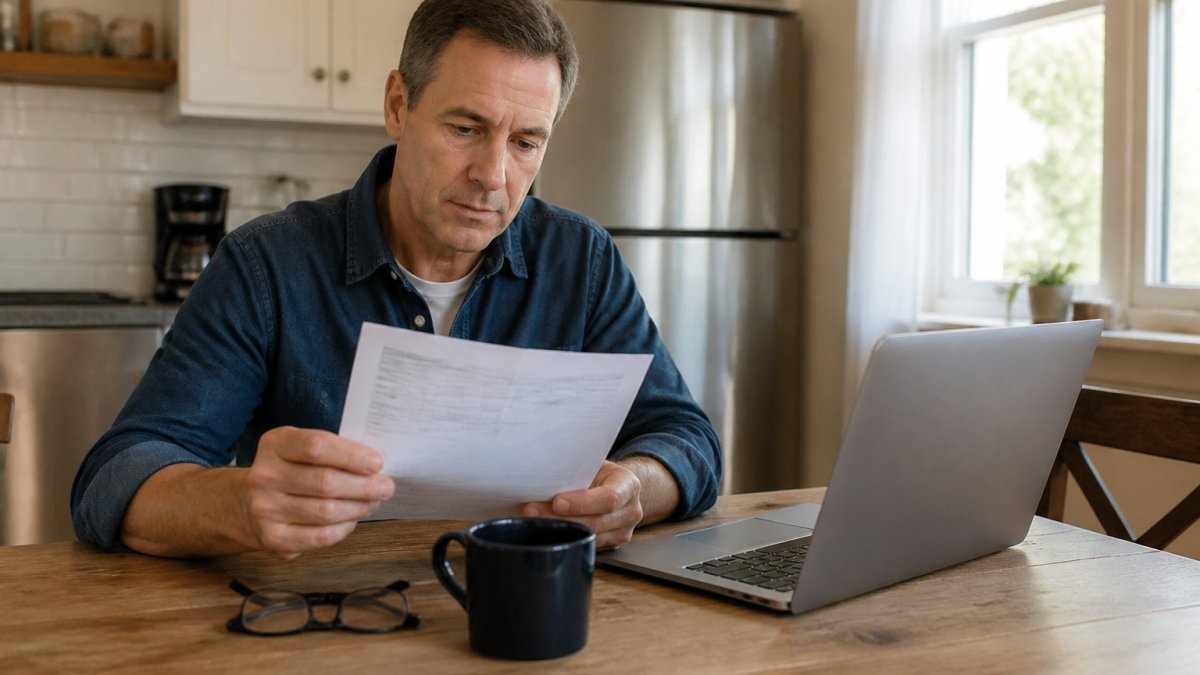
At Anthony & Son Indoor Air Quality, LLC, we look at utility statements every week while helping homeowners across Maryland, DC, and Northern Virginia find out why their energy costs keep climbing.
Most bills follow the same order, top to bottom:
- Account summary: who you are and where the service is
- Billing period and due date: when the charges were earned and when payment is owed
- Meter readings: what the meter said last time and this time
- Usage and charges: how much you used and what it cost
- Messages: rate changes, assistance programs, and notices
Here is the part most guides get wrong. The number at the top of the page is the least useful figure on the whole statement. The usage line is where the real story lives.
The Consumer Financial Protection Bureau’s guide to reading statements makes the same point about any bill: check the details, not just the total.
Step 1: Find Your Account Summary and Customer Information
The account summary sits in the top block of the first page. It holds your name, service address, account number, and the utility’s contact details.
Check three things here:
- Service address: Confirm it matches the property you are paying for. Wrong address, wrong bill.
- Account number: You will need this every time you call or pay online.
- Customer information: Make sure your mailing address and phone number are current so notices reach you.
If you moved recently, this block is where a mix-up shows up first. A common mistake is paying a bill for an old address because the account number looked familiar.
Snap a photo of your account summary block and save it in your phone. When you call the utility, you will have the account number and service address ready without digging through paperwork.
Step 2: Check the Billing Period, Due Date, and Total Amount Due
The billing period tells you which days the charges cover. The due date tells you when the money is owed.
A typical billing cycle runs about 30 days, but it can stretch to 35 or shrink to 28. A longer cycle means more days of use, so a higher total does not always mean higher rates.
Look for these three lines:
- Billing period: the start and end dates of the cycle
- Payment due date: usually 20 to 25 days after the statement date
- Total amount due: what you owe by that date
If the due date falls on a weekend or holiday, pay early. Late fees are small but they add up, and repeated late payments can affect your deposit or service terms.
Step 3: Read Your Meter Number, Serial Number, and Meter Readings
Every meter has a meter number or serial number printed on the bill. Match it to the number stamped on the physical meter to confirm the reading belongs to your home.
The reading section shows two numbers:
- Previous reading: where the meter stood at the last visit
- Current reading: where it stands now
Subtract the previous reading from the current one and you get your usage for the period. That is the number that actually drives your charges.
Actual versus estimated readings
Look for the word “estimated” or the letter “E” next to a reading.
| Reading Type | What It Means | What To Do |
|---|---|---|
| Actual reading | A person or smart meter recorded real usage | Nothing, this is accurate |
| Estimated reading | Usage was guessed from past cycles | Send your own reading or call |
| Customer reading | You submitted the number yourself | Confirm it was accepted |
How to verify a reading yourself
Find the meter, usually outside, sometimes in a basement or utility closet. Write down every digit shown, including any digits after the decimal or in a separate dial box.
What happens after an estimate
An estimate is not a permanent charge.
If your bill shows an estimated reading for two or more cycles in a row, call the utility. Guessed readings that never get corrected can pile up and produce a shock bill later. Ask whether you can submit a customer reading by phone, app, or online portal to close the gap.
If the reading looks wrong
- Photograph the meter face and the bill side by side.
- Note the date and time of your photo.
- Call the utility, give the account number, and read them your meter number.
- Ask for a meter re-read or a billing adjustment.
- If the utility will not correct an obvious error, file a complaint with your state public utility commission. Most commissions require the utility to respond within a set number of days and will not let the utility shut off service for a disputed amount while the case is open.
Snap a photo of your meter on the same day each month and save it in a phone album. You will build your own usage history and catch an estimated reading the moment it appears.
How to Read an Electric Bill: Kilowatt-Hours, Supply, and Delivery
Electric bills charge you in kilowatt-hours, written as kWh. That is simply a measure of how much electricity you used over time.
Your electric bill splits into two main parts:
- Supply charge: what the electricity itself costs
- Delivery charge: what it costs to move that power to your home
Some states let you shop for your supply from a competing supplier, while delivery always stays with your local utility. If you have never switched suppliers, both charges come from the same company.
The U.S. Department of Energy’s energy usage resources explains how appliances and habits drive kWh totals.
Here is what most people miss. Two identical bills can come from very different usage if your rate plan changed mid-cycle. Check the rate line, not just the kWh line.
How to Understand a Gas Bill: Therms, Usage History, and Seasonal Spikes
Gas bills measure usage in therms, not gallons or kWh. One therm equals roughly 100,000 British thermal units of heat.
Your gas bill shows:
- Usage history: a month-by-month bar of your past consumption
- Current usage in therms: this cycle’s total
- Rate per therm: the price applied to each unit
That usage history graph is the most useful tool on the page. Gas use swings hard with the seasons. A furnace working overtime in January will show a spike that looks alarming next to a mild October, and that is normal.
The pattern to worry about is a spike in a mild month. That usually points to a problem: a leak, a failing appliance, or a water heater stuck on.
This is where indoor comfort and energy cost meet. When a furnace runs longer than it should, the gas bill is often the first place it shows.
How to Read a Water Bill: Gallons, Sewer Charges, and Unit Rates
Water bills charge by the gallon, often shown in thousands of gallons. Many water bills also include a sewer charge tied to the same usage.
Look for:
- Water usage: gallons used this cycle
- Unit rate: price per unit of water
- Sewer charge: often based on the same gallons, billed separately
- Fixed service charge: a flat fee no matter how much you use
A sudden jump in water usage with no change in habits usually means a leak. A running toilet can waste hundreds of gallons a day without making a sound.
Compare this month’s gallons to the same month last year. Seasonal watering explains summer increases. A winter spike does not.
Utility Bill Charges Explained: Every Fee You Will See
Most of the confusion on a residential utility bill comes from the fee list, not the usage. Two bills with the same kWh or therms can land at very different totals because of what sits below the usage line.
Usage-based charges (they move with how much you use)
- Supply or generation charge: the cost of the energy or water itself. On an electric bill this is priced per kWh; on a gas bill, per therm; on a water bill, per thousand gallons. If your rate is $0.14 per kWh and you used 900 kWh, this line is roughly $126 before anything else is added.
- Delivery or distribution charge: what it costs to move the energy or water to your address, poles, wires, pipes, pumps, and the crews that maintain them. Delivery is almost always billed by your local utility even if you buy supply from a competing supplier.
- Sewer charge: on a water bill, the cost to treat what goes down the drain. It is usually tied to the same gallons you were billed for water, which is why a water bill often looks like two charges for one number.
Fixed charges (they show up whether you use anything or not)
- Fixed or service charge: a flat monthly fee for having the service connected and available. A vacant house still pays this.
- Meter charge: a small recurring fee for the meter itself and the reading or data transmission.
- Minimum bill: some utilities guarantee a floor amount per month regardless of usage.
Pass-through and adjustment charges (set by regulators, not by you)
- Taxes: state and local taxes applied to utility service. These are not optional and not negotiable.
- Fees and adjustments: program costs, storm recovery, energy-efficiency surcharges, and rate-case adjustments. These are approved by your state public utility commission and appear on the bill as separate line items so you can see what you are paying for.
- Fuel or purchased-power adjustment: a true-up that reflects what the utility actually paid for fuel or wholesale power versus what it estimated. It can be a credit or a charge.
How to tell which is which
Look at the label. If the charge is described “per kWh,” “per therm,” or “per 1,000 gallons,” it is usage-based and will fall when you use less.
Regulated utilities must file their rates and charges publicly. The Federal Energy Regulatory Commission’s consumer information covers wholesale and interstate matters, and your state public utility commission publishes the approved tariff, the document that lists every charge and the rule behind it.
Circle every charge on your bill that is described “per” a unit. Those are the only ones your usage habits can move. Everything else is the cost of having service at all.
If a charge makes no sense, call the utility and ask for a plain-language explanation. If you spot a clear error, you have the right to dispute it. Ask for the charge to be reviewed and, if needed, file a formal complaint with your state utility commission. Keep your account number and the disputed amount handy, and put your request in writing.
The usage line tells you what happened. The fee list tells you what it cost. Read both before you call anyone.
Frequently Asked Questions
What are the main sections of a residential utility bill?
Most residential utility bills include five sections: account summary and customer information, billing period and due date, total amount due, meter readings with usage history, and a breakdown of charges. Electric bills add supply and delivery charges, gas bills show therms used, and water bills list gallons plus sewer charges. Locating each section takes about two minutes once you know the layout.
How can I tell how much electricity or gas I used this month?
Subtract the previous reading from the current reading shown on your bill. The difference is your usage for that billing period, measured in kilowatt-hours for electricity or therms for gas. Most utilities also print a monthly usage history bar so you can compare consumption across the past 12 months and spot seasonal spikes.
What does a kilowatt-hour mean on an electric bill?
A kilowatt-hour (kWh) is the energy used by a 1,000-watt appliance running for one hour. A typical window air conditioner draws roughly 1,000 watts, so running it for an hour uses about one kWh. Your bill multiplies total kWh by the unit rate to calculate the supply charge, then adds delivery and fixed fees.
What should I do if my residential utility bill looks too high?
First, check whether the reading is marked actual or estimated. Estimated readings often inflate charges until a real reading is taken. Then compare usage history against the same month last year. If usage is flat but the bill jumped, call the utility and ask for a meter re-read. You can also file a formal dispute, which most utilities must resolve within a set number of days.