
Table of Contents
- Emergency AC Repair: When the Cost Makes Sense
- What Counts as an AC Emergency?
- Emergency HVAC Repair Cost vs. Standard Service Calls
- AC Blowing Warm Air: Troubleshoot Before You Call
- AC Repair vs Replacement Cost: The 50% and $5,000 Rules
- The Hidden Costs of Waiting: Health, Safety, and Efficiency
- How to Avoid Paying for Emergency AC Repair
- The Verdict: Is Emergency AC Repair Worth It?
- Frequently Asked Questions
Last Updated: September 7, 2026
Emergency AC Repair: When the Cost Makes Sense
An emergency AC repair is worth it when the failure threatens health, safety, or property, making the premium for after-hours service a justified expense. This guide from Anthony & Son Indoor Air Quality, LLC breaks down the financial and practical reality of emergency ac repair so you can decide with confidence instead of panic.
Emergency calls carry an after-hours premium, yet waiting through a heat wave can create bigger problems. Below, we give you a framework for telling a genuine emergency apart from a routine failure, along with troubleshooting steps to run before you pick up the phone.
An AC emergency is defined by risk to people or property, not by discomfort alone. If no one is vulnerable to heat and the system isn’t threatening your home, a standard appointment is the financially sound choice.
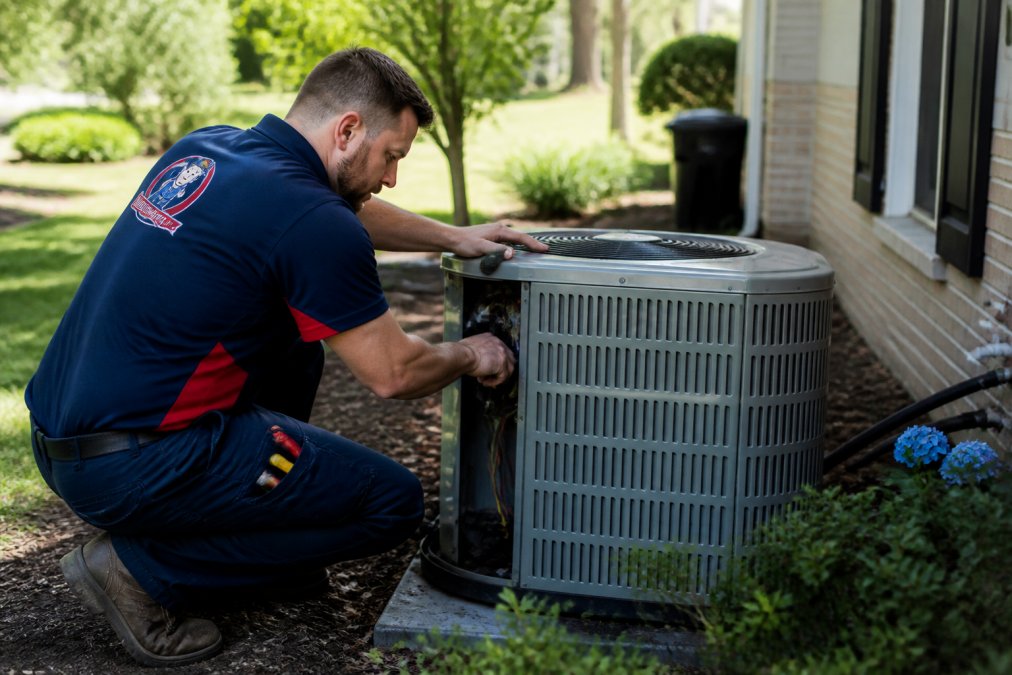
What Counts as an AC Emergency?
A true AC emergency involves one of three conditions: a total system breakdown during extreme heat, a refrigerant leak that poses health risks, or an electrical failure creating a fire hazard. Each of these justifies the emergency surcharge because the consequences of waiting include heat stroke, property damage, or safety hazards. The CDC guidance on extreme heat safety emphasizes that indoor temperatures above certain thresholds create serious health risks, particularly for older adults and young children.
Situations that are not emergencies include warm air blowing on a mild day, unusual noises, or a system that short cycles occasionally. These are component failures that can wait for a standard service call without endangering anyone. Knowing the difference saves you the emergency dispatch fee and the premium labor rates that come with after-hours service.
Emergency HVAC Repair Cost vs. Standard Service Calls
The price difference between a standard and an emergency call isn’t a flat ‘premium’, it’s a stack of surcharges that can add $150 to $500 or more to your final bill.
Here’s how a typical emergency call breaks down versus a standard appointment:
| Cost Component | Standard Business-Hours Call | Emergency After-Hours Call | Why the Difference Exists |
|---|---|---|---|
| Diagnostic Fee | $79 – $150 | $150 – $300 | Covers the initial trip and system evaluation; after-hours rates reflect overtime labor for the dispatcher and technician. |
| Labor Rate | $75 – $150 per hour | $150 – $250 per hour | Overtime wages and the ‘opportunity cost’ of pulling a tech from a scheduled job or their personal time. |
| Emergency Dispatch Surcharge | $0 | $50 – $200 flat fee | A flat fee to prioritize your call over others in the queue; it’s not a negotiation point, but it is a standard industry practice. |
| After-Hours Parts Markup | Standard retail + 10-20% | Standard retail + 20-40% | Parts suppliers often charge delivery fees for after-hours warehouse access, which is passed on to you. |
| Weekend/Holiday Multiplier | None | 1.5x – 2.0x on labor | Union agreements and company policies often mandate double-time pay for work on Sundays and federal holidays. |
The ‘Time-of-Day’ Factor
The most significant variable is when the failure occurs. A call placed at 6:00 PM on a Tuesday will trigger a lower after-hours premium than a call at 2:00 AM on a Saturday. Most companies define ’emergency hours’ as:
- Evening Premium (6 PM – 10 PM): Adds 25-50% to the base labor rate.
- Overnight Premium (10 PM – 7 AM): Adds 50-100% to the base labor rate.
- Weekend/Holiday Premium: Adds 50-100% regardless of the time of day.
Why the Surcharge Exists (The Real Mechanism)
The premium isn’t arbitrary. A technician on an emergency call often works overtime at 1.5x to 2x their normal wage. The company also maintains a ‘standby’ roster and may displace a scheduled maintenance visit, costing revenue on that slot. The surcharge covers these real costs.
The Financial Rule of Thumb
A common pattern in the industry is that an emergency repair costs 2 to 3 times what the exact same repair would cost during a standard business-hours call. For a minor fix like a capacitor replacement (which might cost $150-$250 during the day), the emergency premium might push it to $400-$600. For a major repair like a compressor replacement, the premium could add $500 to $1,000 on top of an already hefty bill.
Before you authorize an emergency dispatch, ask the dispatcher for a written or verbal estimate of the total emergency surcharge. If the repair can wait 12 hours without endangering anyone, scheduling it for the first slot the next morning will often save you 40-60% on the total invoice.
AC Blowing Warm Air: Troubleshoot Before You Call
Before you pay for an emergency dispatch, run through these five troubleshooting steps when your AC is blowing warm air. Many so-called emergencies trace back to simple fixes that take minutes, not hours.
- Check the thermostat setting and switch it to “cool” with a target temperature below the current room temperature.
- Inspect the air filter; a clogged filter restricts airflow and can freeze the evaporator coil.
- Verify the outdoor breaker and disconnect switch; a tripped breaker is a common electrical failure that you can reset safely.
- Clear debris and vegetation from around the outdoor condenser unit to restore proper airflow.
- Check the condensate drain for clogs; a full drain pan triggers a safety switch that shuts the system down.
If these steps do not restore cooling, the problem is likely a refrigerant leak, compressor failure, or a more serious electrical issue requiring professional diagnosis. At that point, a service call is warranted, but you still have the option to schedule it for standard hours if conditions are safe.
Never attempt DIY repairs on refrigerant lines or electrical components. Refrigerant handling requires certification, and electrical work carries shock and fire risks. A mistake can void your warranty coverage and turn a repair into a full replacement.
AC Repair vs Replacement Cost: The 50% and $5,000 Rules
The AC repair vs replacement cost decision comes down to two widely used financial rules that remove guesswork from an emotional moment. The 50% rule states that if the repair estimate exceeds half the cost of a new system, replacement is the better investment. The $5,000 rule, referenced by industry guidance on HVAC replacement decisions, suggests that if your system is older and the repair approaches $5,000, you are better off putting that money toward a new unit.
These rules matter most during an emergency call, when the pressure to decide quickly is highest. A reputable technician will give you both numbers: the repair cost and the replacement estimate. If your unit is past its expected lifespan of roughly 15 years and the compressor fails, replacement almost always wins on energy efficiency and long-term cost.
Ask the technician for the repair estimate in writing before authorizing any work. A trustworthy HVAC company will provide transparent pricing and explain how the repair cost compares to replacement value without pressuring you either way.
The Hidden Costs of Waiting: Health, Safety, and Efficiency
Most advice frames the decision as ‘repair now vs. repair later,’ missing the third option: running a failing system while you wait. This is where hidden costs compound.
The Energy Efficiency Penalty (The Math They Don’t Show You)
A failing AC doesn’t just cool less; it consumes more electricity to do so:
- Refrigerant Leak: A system low on refrigerant loses its ability to absorb heat. The compressor runs longer and harder to try to meet the thermostat setpoint. A 20% refrigerant loss can increase energy consumption by 20-30% because the system never reaches the target temperature and runs continuously (energy.gov).
- Failing Compressor: A compressor that is struggling to start (hard-starting) can draw 2-3 times its normal running amperage during the start cycle. Over a week of repeated cycling, this can add $30-$80 to your utility bill.
- Frozen Evaporator Coil: When airflow is restricted, the coil freezes solid. Ice acts as an insulator, blocking heat transfer. The system runs non-stop, blowing lukewarm air, while the electric meter spins rapidly.
The Cost Calculation:
If your normal summer electric bill is $200 and a refrigerant leak makes the system run 50% longer, you might see a $100-$150 increase that month. Waiting two weeks for a standard appointment means $200-$300 in wasted electricity, often exceeding the emergency dispatch surcharge.
If your system is running but not cooling, check your energy meter. If it’s spinning much faster than usual, you are paying a premium for a system that is actively damaging itself. In this specific scenario, the emergency repair is often the cheaper option because it stops the bleeding on your utility bill.
The Cascade Failure Risk
Waiting doesn’t just cost electricity; it converts a small repair into a large one. A system that short-cycles due to a failing thermostat or low refrigerant will eventually burn out the compressor. A $200 capacitor replacement, if ignored, becomes a $2,500 compressor replacement. The ‘waiting’ strategy only works if the system is completely off.
Vulnerable Population Considerations (The Medical Necessity Angle)
For most healthy adults, a 90°F indoor temperature is uncomfortable. For specific populations, it is a medical emergency. The calculus changes entirely when you factor in:
- Infants (under 12 months): They cannot regulate body temperature effectively. Their sweat glands are immature, making them highly susceptible to heat rash, dehydration, and heat stroke at temperatures above 80°F.
- Elderly (65+): Age reduces the body’s ability to sense heat and produce sweat. Many seniors take diuretics or blood pressure medications that exacerbate dehydration.
- Pets (especially brachycephalic breeds like pugs or bulldogs): They cannot pant efficiently and are at high risk of heat stroke at 85°F.
- Chronic Conditions: Asthma, COPD, and heart disease are all aggravated by high heat and humidity.
The Decision Framework for Vulnerable Households:
If a vulnerable person lives in the home, the ‘wait until morning’ rule is void. The threshold for an emergency call drops significantly. The cost of the emergency premium ($200-$500) must be weighed against the cost of an ER visit for heat exhaustion (which averages over $1,000 even with insurance). In this context, the emergency repair is not a luxury; it is a medical expense.
If you are healthy and the temperature is below 85°F, waiting is a financial decision. If you have an infant, an elderly parent, or a pet, waiting is a health decision. Run the energy math first; if the system is running inefficiently, the repair pays for itself in avoided utility bills. If a vulnerable person is present, skip the math and make the call.
How to Avoid Paying for Emergency AC Repair
The most effective way to avoid emergency AC repair costs is preventative maintenance before the cooling season begins. A seasonal tune-up catches refrigerant leaks, electrical issues, and component wear while they are still inexpensive to fix. Many providers, including Anthony & Son Indoor Air Quality, LLC, offer service contracts with regular inspections and priority scheduling.
Simple habits also reduce risk: change air filters monthly during peak use, keep the outdoor unit clear of debris, and watch for early warning signs like short cycling, unusual noises, or rising energy bills.
Setting aside a small monthly amount for HVAC repairs turns an unexpected breakdown from a crisis into a manageable expense, so you can authorize the repair based on need rather than budget panic.
The Verdict: Is Emergency AC Repair Worth It?
Emergency AC repair is worth it when the failure endangers health or property, and not worth it when the problem can safely wait for a standard appointment. The distinction is about risk assessment, not heat tolerance. A family with a newborn in 100-degree weather needs immediate service; a single adult who can use fans can wait until morning and save the premium.
The financial rules give a clear framework: repair if the cost stays well below half of replacement value, and replace if the estimate approaches the $5,000 threshold on an aging unit. Run the troubleshooting steps first, call during business hours when possible, and maintain your system to prevent emergencies.
When you do need professional help, choose a provider that combines technical expertise with honest guidance. Anthony & Son Indoor Air Quality, LLC brings fully certified technicians, transparent pricing, and a family-owned commitment to integrity on every call, whether it is an emergency dispatch or a scheduled tune-up. Contact us today to schedule preventative maintenance or get a straight answer about your repair options.
Frequently Asked Questions
At what temperature is a broken AC an emergency?
When indoor temperatures reach 85°F or higher, a broken AC becomes a health risk, especially for older adults, young children, and people with chronic conditions. Heat exhaustion and heat stroke become real dangers at these levels. If your AC fails during a heat wave and your home is already above 85°F, emergency AC repair is worth the premium. For milder evenings, closing blinds, using fans, and opening windows can often hold you over until a standard appointment.
How much more does emergency AC service cost compared to standard visits?
Emergency HVAC repair cost typically includes an after-hours dispatch fee and higher labor rates on top of the standard diagnostic fee. Expect to pay a premium over a regular service call, though the exact amount varies by company and time of night. Some providers apply the emergency surcharge only to the dispatch, while others raise the hourly rate. Always ask for the total estimate before approving work so there are no surprises on the final bill.
What is the $5,000 rule for AC repair vs. replacement?
The $5,000 rule is a quick financial benchmark: multiply the age of your AC in years by the estimated repair cost. If the result exceeds $5,000, replacement is usually the smarter investment. For example, a 10-year-old unit with a $600 repair gives you $6,000, which points toward replacement. A related guideline, the 50% rule, suggests replacing the system when a single repair costs more than half the price of a new unit.
Does a refrigerant leak constitute an emergency HVAC repair?
A refrigerant leak does not usually require an emergency call unless your home is at dangerous temperatures. Low refrigerant causes warm air and ice buildup on the coils, but it will not damage your health or create a safety hazard overnight. However, running the system with low refrigerant can strain the compressor and lead to a more expensive failure. Schedule a repair for the next business day and set the thermostat to a lower setting to reduce strain.
Is it safe to wait until morning for AC repair if the system is blowing warm air?
Waiting until morning is safe for most people if indoor temperatures stay below 85°F and no one in the home is vulnerable to heat. Drink plenty of water, use ceiling fans, and close curtains to block daytime heat. If temperatures climb higher or someone has a medical condition that heat aggravates, emergency AC repair is justified. Check on elderly neighbors and young children, as they feel heat stress faster than healthy adults.