
Table of Contents
- Smart Thermostat Installation Cost Overview
- Top Smart Thermostat Models and Their Costs
- Factors Affecting Smart Thermostat Installation Price
- Smart Thermostat C-Wire Installation Requirements
- DIY vs Professional Thermostat Installation
- Energy Savings and Long-Term ROI
- Hidden Costs and Maintenance Considerations
- Conclusion
- Frequently Asked Questions
Last Updated: September 19, 2026

Smart Thermostat Installation Cost Overview
Smart thermostat installation cost depends on whether you install the unit yourself or hire a professional, plus the thermostat price and any additional wiring work required.
Smart thermostats range from budget-friendly models under $100 to premium options exceeding $250. Professional installation adds labor costs, while DIY installation eliminates labor but requires technical confidence and proper tools.
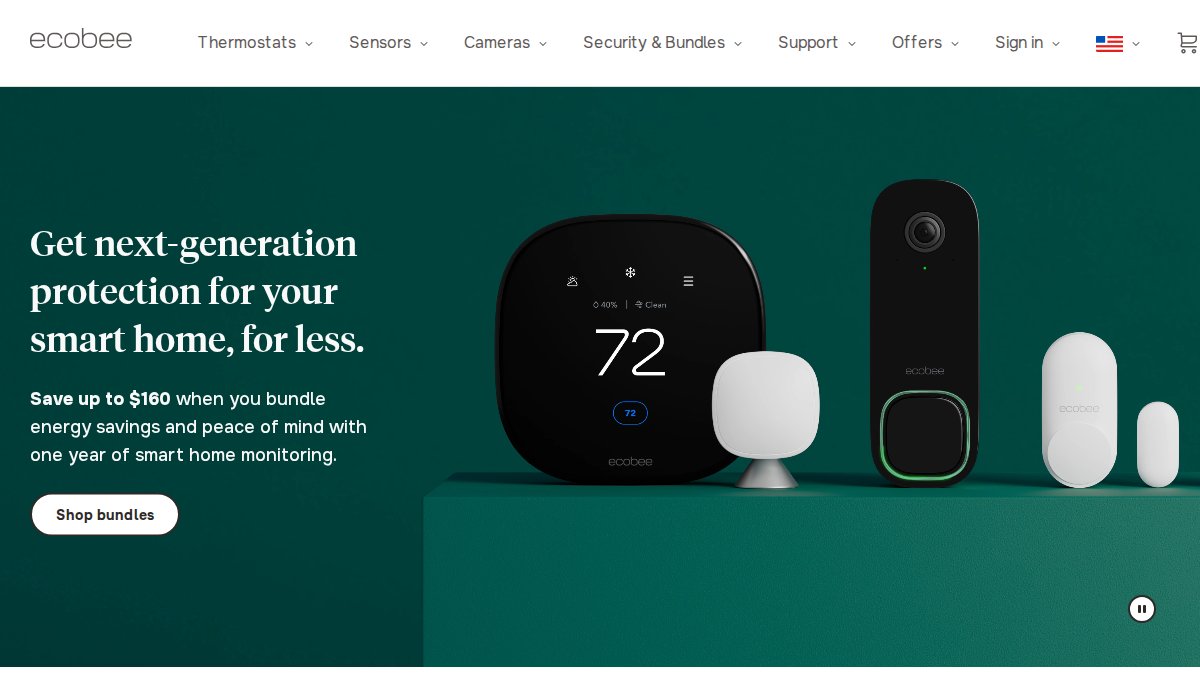
Hidden costs, C-wire adapters, system compatibility checks, sensor upgrades, and maintenance, factor into the true cost of ownership. This guide breaks down every expense from the thermostat itself to professional labor rates and energy savings.
The smart thermostat installation cost varies dramatically based on your HVAC system’s age, wiring setup, and whether you hire a professional. Budget between $300 and $800 for a complete professional installation, or $80-$250 if you handle installation yourself.
Top Smart Thermostat Models and Their Costs
Budget-Friendly Options
Google Nest Thermostat, Best for Simplicity and Price
At $79.00, the Google Nest leads the budget category with intuitive setup that takes minutes and seamless Google Home integration. Energy-efficient scheduling reduces costs without advanced programming. However, it lacks multi-room sensor support and learning algorithms, so it won’t solve temperature inconsistencies across rooms.
Amazon Smart Thermostat, Best for Alexa Ecosystems
At $80.00, it rivals the Google Nest on price with Alexa voice control integration. Automatic energy-saving adjustments activate when you’re away, though automation is less sophisticated than learning models. Full functionality requires an Alexa device, and advanced reporting features are limited.
Mid-Range and Premium Models
Ecobee Smart Thermostat Essential, Best for Balanced Features and Price
At $120.00, the Ecobee Essential bridges budget and premium options with smart home compatibility and reliable energy-saving scheduling. Remote app control works smoothly, but it lacks advanced sensors and room-specific temperature balancing found in the Premium model.
Ecobee Smart Thermostat Premium, Best for Multi-Room Temperature Control
At $229.99, the Ecobee Premium includes a remote room sensor for multi-zone temperature balancing and built-in air quality monitoring. Advanced occupancy sensing learns when rooms are occupied and adjusts accordingly. Installation is more involved than budget models.
Honeywell Home T9 Smart Thermostat, Best for Homes with Uneven Temperatures
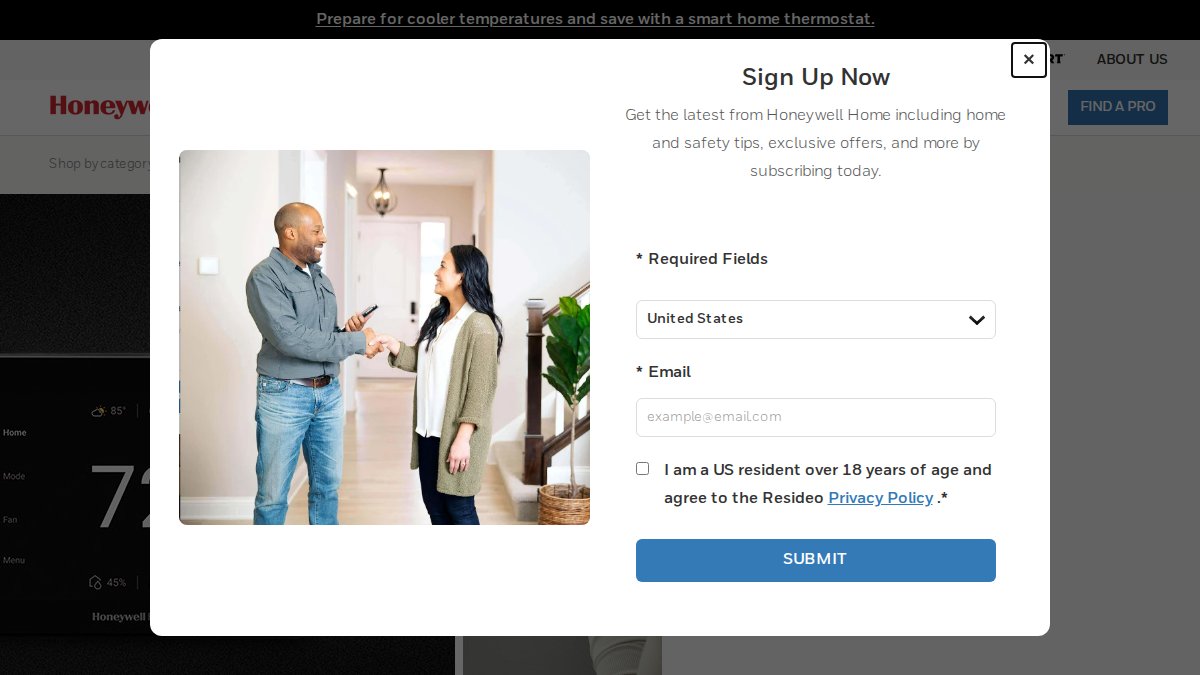
At $279.99, the Honeywell T9 specializes in multi-room comfort with intelligent sensor support and a larger touchscreen display. Geofencing automatically adjusts temperature when you leave home. The multi-room sensor approach suits larger homes or those with poor airflow distribution.
| Model | Price | Best For | Key Feature |
|---|---|---|---|
| Google Nest | $79.00 | Budget-conscious users | Simple setup, Google integration |
| Amazon Smart | $80.00 | Alexa ecosystems | Voice control, affordable |
| Ecobee Essential | $120.00 | Balanced needs | Reliable automation, compact |
| Ecobee Premium | $229.99 | Multi-room balancing | Included room sensor |
| Honeywell T9 | $279.99 | Uneven temperatures | Advanced multi-zone support |
Factors Affecting Smart Thermostat Installation Price
HVAC System Age and Compatibility
Older systems (pre-1990s) often lack the low-voltage wiring infrastructure modern smart thermostats expect and may require additional wiring work. Compatibility checks cost $75-$150. Newer systems (2010+) usually have standard wiring, though some high-efficiency systems use proprietary controls that limit thermostat options.
Wiring Complexity and C-Wire Requirements
The C-wire (common wire) powers most smart thermostats. Older homes often lack a dedicated C-wire, requiring an adapter ($50-$150 DIY, $150-$300 professional) or new wiring ($200-$500 labor). Some thermostats operate on battery power to avoid C-wire requirements, but battery-powered models have limitations in cold climates.
Attempting C-wire installation without proper knowledge risks damaging your HVAC system or creating fire hazards through incorrect wiring. If you’re uncertain about your home’s wiring, hire a professional for this step.
Professional Labor Rates
Service call fees range from $75-$150 to diagnose your system. Installation labor typically costs $150-$400 depending on complexity. Metropolitan areas charge more than rural regions. Always request a written estimate before agreeing to professional installation.
Smart Thermostat C-Wire Installation Requirements
The C-wire delivers constant power to your smart thermostat, enabling features like remote access, geofencing, and continuous monitoring. Understanding C-wire requirements prevents installation failures and system damage.
What Is a C-Wire?
A C-wire is the common return wire in your HVAC system’s low-voltage wiring that completes the electrical circuit. Without it, your thermostat relies on battery power or steals power from other circuits. Smart thermostats demand continuous power for WiFi connectivity, sensors, and remote access, so most cannot function reliably without a C-wire.
Checking for an Existing C-Wire
Turn off power at the breaker and remove your thermostat’s faceplate. Look for a blue or black wire connected to a terminal marked “C.” If the C terminal is empty, you lack a dedicated C-wire and will need an adapter or new installation.
C-Wire Adapter Solutions
A C-wire adapter creates a virtual C-wire by tapping power from other circuits and costs $20-$50. However, adapters may not provide sufficient power during high-demand cycles and can cause thermostat resets or WiFi disconnections on some HVAC systems. A professional can determine whether an adapter suits your system.
Before investing in a C-wire adapter, test it in your system. Many adapters come with a trial period, allowing you to confirm reliable operation before permanent installation. If your thermostat frequently disconnects or resets, a true C-wire installation becomes necessary.
Professional C-Wire Installation
Running a new C-wire costs $200-$500 in labor depending on distance and wall construction. This permanent solution eliminates adapter limitations and ensures full functionality. Professional installation includes system calibration to verify your HVAC equipment responds correctly to thermostat commands.
DIY vs Professional Thermostat Installation
DIY Installation Advantages
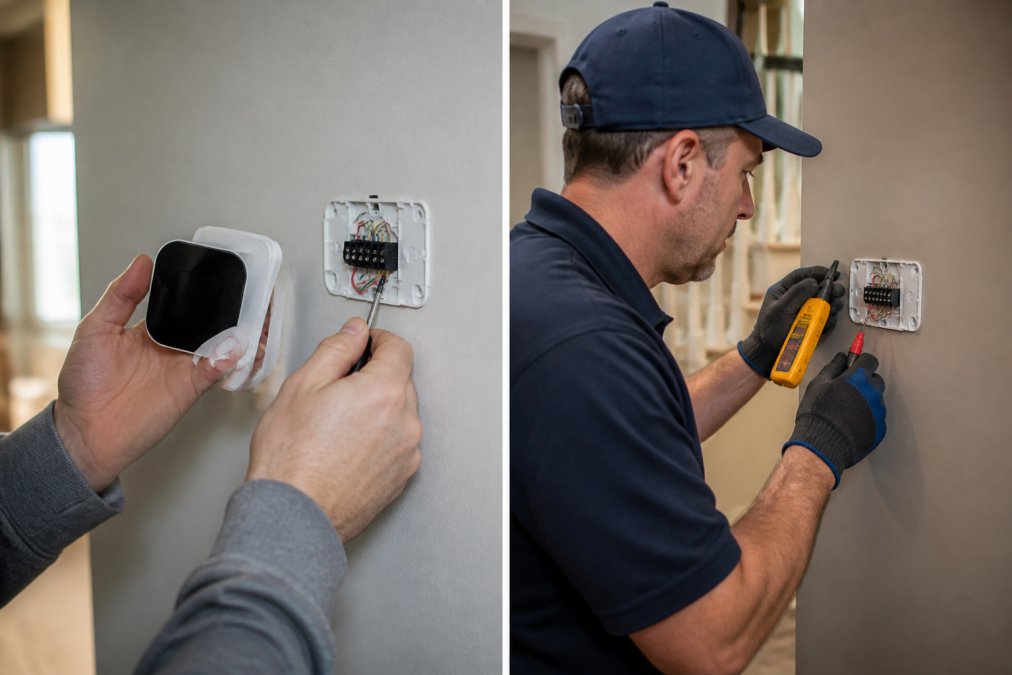
DIY installation saves $150-$400 in labor costs and takes 20-45 minutes for budget models if your home has a C-wire. Most thermostats include detailed guides and video tutorials. If your wiring is standard and your system is compatible, DIY installation is straightforward.
DIY Installation Risks
Incorrect wiring can damage your HVAC system or create safety hazards. Reversing hot and common wires might prevent your system from responding to thermostat commands. If your home lacks a C-wire, DIY installation becomes complicated and mistakes can compromise system safety or void warranties.
Professional Installation Advantages
A certified HVAC technician brings expertise in system compatibility, wiring standards, and safety protocols. They verify your system works correctly and include system calibration. Many technicians offer warranties on their work, protecting you if problems arise after installation.
When to Choose Professional Installation
Hire a professional if your home was built before 2000, your HVAC system uses proprietary controls, you lack a C-wire, or you’re uncomfortable working with electrical wiring. Anthony & Son Indoor Air Quality, LLC recommends professional installation for anyone uncertain about their system’s compatibility or wiring configuration.
Older homes in particular benefit from professional assessment. A technician can identify wiring issues, verify HVAC compatibility, and recommend the best thermostat for your specific situation. The service call fee ($75-$150) is worth the confidence and protection it provides.
Energy Savings and Long-Term ROI
Smart thermostats reduce energy consumption through automated scheduling, learning capabilities, and remote access (the EPA). Understanding potential savings helps justify the installation investment.
How Smart Thermostats Save Energy
Programmable thermostats adjust temperature based on your schedule, reducing heating and cooling when you’re away or sleeping. A smart thermostat takes this further by learning your patterns and making automatic adjustments.
Geofencing detects when you leave home and lowers your thermostat, preventing energy waste while you’re away. When you approach home, the system adjusts temperature back to your preference, ensuring comfort upon arrival. Remote app control allows manual adjustments if your schedule changes unexpectedly.
Realistic Savings Expectations
Many homeowners report reduced energy bills after installing smart thermostats, though exact savings vary based on climate, home insulation, system age, and usage patterns. Homes with poor insulation or older HVAC systems may see modest savings because the system works harder regardless of thermostat efficiency.
Newer, well-insulated homes typically see more significant savings. A home with excellent insulation might reduce heating and cooling costs by 10-15% annually through smart thermostat optimization. Multiply this percentage by your current heating and cooling expenses to estimate your potential savings.
Calculating Long-Term ROI
If your annual heating and cooling costs total $1,200 and a smart thermostat reduces this by 12%, you save approximately $144 per year.
Energy Rebates and Incentives
Hidden Costs and Maintenance Considerations
Beyond the thermostat price and installation labor, several hidden costs affect your total investment. Planning for these expenses prevents budget surprises.
System Calibration and Testing
Sensor and Accessory Upgrades
Long-Term Maintenance Costs
Warranty and Replacement Costs
The true smart thermostat installation cost extends beyond the device price. Budget for professional installation ($150-$400), potential C-wire work ($0-$500), system calibration ($75-$150), and long-term maintenance ($75-$150 annually). Total investment typically ranges from $300-$800 for a complete professional installation.
Conclusion
Smart thermostat installation cost varies dramatically based on your HVAC system’s age, existing wiring configuration, and whether you hire a professional. Budget-friendly models start at $79, while premium options reach $280. Professional installation adds $150-$400 in labor, plus potential C-wire work ranging from $0-$500.
Frequently Asked Questions
How much does professional smart thermostat installation cost?
Professional installation costs vary based on your HVAC system complexity, existing wiring, and regional labor rates. Most homeowners pay between $100-$300 for labor alone, plus the thermostat unit price ($79-$280 depending on model). If your system lacks a C-wire and requires an adapter installation, expect additional costs. Contact Anthony & Son Indoor Air Quality, LLC for a free quote to understand your specific installation expenses.
Do I need a C-wire for smart thermostat installation?
Most smart thermostats require a C-wire (common wire) to power the device continuously. If your HVAC system doesn’t have one, you’ll need a C-wire adapter, which adds $50-$150 to your total cost. An HVAC technician can test your wiring and determine whether an adapter is necessary. Without proper power, your smart thermostat may experience connectivity issues or battery drain.
Is it cheaper to install a smart thermostat yourself or hire a professional?
DIY installation saves $100-$300 in labor costs if you’re comfortable with basic wiring and your system is straightforward. However, professional installation ensures compatibility with your HVAC system, proper C-wire handling, and manufacturer warranty protection. If your home has an older HVAC system or complex wiring, professional installation reduces the risk of costly mistakes and system damage.
How much can I save on energy bills with a smart thermostat?
Smart thermostats typically reduce heating and cooling costs by 10-15% annually through automated scheduling, geofencing, and learning algorithms. Actual savings depend on your current usage patterns, climate, and how actively you use the thermostat’s features. Over 5-10 years, energy savings often offset the device and installation costs, especially if you pair the thermostat with regular HVAC maintenance.