
Table of Contents
- What Qualifies as Emergency HVAC Service
- DIY Troubleshooting Before Calling for Emergency HVAC Repair
- Understanding Emergency AC Repair Cost DC and What to Expect
- DC Landlord HVAC Repair Laws and Your Rights
- How to Book Emergency HVAC Repair in DC
- What to Expect During an Emergency Service Call
- Energy Efficiency Rebates and Long-Term Savings
- Conclusion
Last Updated: August 7, 2026
What Qualifies as Emergency HVAC Service
An emergency HVAC situation is one where your heating or cooling system has failed completely or is operating dangerously, requiring immediate repair to restore comfort or safety. Understanding the difference between emergency and non-emergency problems can save you money while ensuring you get the right response time.
At Anthony & Son Indoor Air Quality, LLC, we help customers determine whether their situation truly qualifies for emergency dispatch. Emergency service calls typically carry higher fees than standard appointments.
Emergency vs. Non-Emergency Criteria
True HVAC emergencies include: no heat during winter freezing temperatures, no air conditioning during dangerous heat waves, active refrigerant leaks with hissing sounds, furnaces producing burning smells or visible smoke, and heat pumps making loud grinding or banging noises.
Non-emergency situations include thermostat recalibration, clogged air filters reducing but not eliminating airflow, stabilized minor refrigerant leaks, and systems running but not reaching desired temperatures. These reduce comfort and efficiency but don’t create immediate danger.
The key question is whether your situation poses a safety risk or makes your home uninhabitable. If yes, call for emergency service. If no, schedule a standard appointment and save the emergency premium.
When to Call 24/7 vs. Schedule an Appointment
Winter heating failures demand immediate attention because prolonged cold exposure can damage plumbing and create health hazards, especially for children and elderly residents. Summer cooling failures during extreme heat waves also warrant emergency response, particularly for vulnerable household members.
Non-urgent repairs like noisy compressors, reduced cooling capacity, or frequent cycling can be scheduled during business hours. Emergency service outside business hours, weekends, or holidays costs significantly more than standard appointments. If your system fails on a mild Friday night, you may wait until Monday; if it fails on a winter night, emergency response is necessary.
DIY Troubleshooting Before Calling for Emergency HVAC Repair
Before contacting an HVAC contractor, spend five minutes checking the most common causes of system failure. Many emergency calls are simple fixes homeowners can resolve themselves, saving service call costs entirely.
Check Your Thermostat Settings
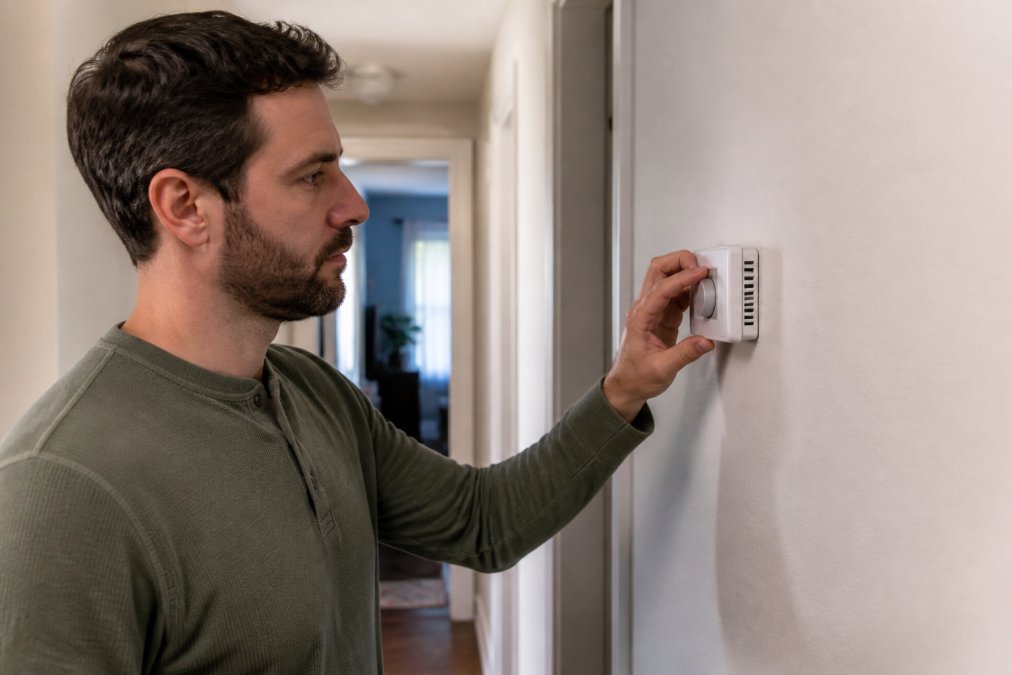
Verify that the thermostat is set to "Heat" mode for heating or "Cool" mode for air conditioning, not "Off." Check that the temperature setting is higher than current room temperature for heating, or lower for cooling. This single mistake accounts for a large percentage of emergency calls that don’t require a technician.
For battery-powered thermostats, replace batteries if the display is blank or dim. For hardwired thermostats, check the circuit breaker and flip it off and on again if the display is dark.
Inspect Air Filters and Airflow
A severely clogged air filter restricts airflow and may trigger automatic shutdown. Check your furnace or air handler’s filter; if it’s dark gray or black with visible dust, replace it. This takes two minutes and costs under ten dollars.
After replacing the filter, set your thermostat to trigger the system and wait two minutes. If warm or cool air flows from vents, the clogged filter was the problem. Check that supply and return vents aren’t blocked by furniture, curtains, or closed doors. Open closed interior doors and move furniture away from vents, then test again.
Look for Visible Leaks or Damage
Walk around your furnace or air handler for water pooling or dripping pipes. Small condensation is normal, but active leaking requires professional repair. Inspect visible refrigerant lines for damage, dents, or separation. Do not attempt to reconnect disconnected lines, call for emergency service.
Check that your outdoor unit isn’t blocked by leaves, branches, or debris. Remove visible obstruction and carefully clear snow away from the unit without damaging fins. If troubleshooting doesn’t reveal an obvious cause, contact Anthony & Son Indoor Air Quality, LLC for emergency service.
Understanding Emergency AC Repair Cost DC and What to Expect
Emergency HVAC repair pricing in DC reflects service urgency and repair complexity. Understanding what drives costs helps you make informed decisions.
Service Call Fees and Diagnostic Charges
Many HVAC contractors charge a service call fee to dispatch a technician. Emergency service call fees are typically higher than standard fees because emergency calls often occur outside business hours. The diagnostic fee is separate and covers the inspection. Some contractors waive the diagnostic fee if you proceed with their recommended repair; others charge it regardless. Ask about the contractor’s policy before they arrive.
Factors That Affect Repair Pricing
System age dramatically affects repair costs, older systems may require hard-to-find parts that cost more. The repair type determines labor hours: replacing a thermostat battery takes 15 minutes, while replacing a compressor takes four to six hours. Time of day and day of week affect emergency pricing. Equipment accessibility influences labor costs; cramped spaces take longer and cost more.
When you contact Anthony & Son Indoor Air Quality, LLC, ask the dispatcher for a cost range so you understand pricing before the technician arrives.
DC Landlord HVAC Repair Laws and Your Rights
DC housing code establishes clear requirements for landlord-provided heating and cooling.
Heating Requirements Under DC Housing Code
DC law requires landlords to maintain 68°F between October 1 and May 31 in the main living area. If outdoor temperatures drop below 55°F, landlords must maintain 68°F indoors regardless of date. Landlords must maintain functioning heating systems and cannot delay repairs or ask tenants to pay for emergency restoration.
While DC law doesn’t explicitly mandate air conditioning, if landlords provide cooling equipment, it must be maintained in working condition.
Tenant Notification and Emergency Response Timelines
Landlords must provide written notice before entering for HVAC repairs, except in genuine emergencies. DC law requires landlords to respond to emergency repair requests within 24 hours during the heating season. Non-emergency repairs must be completed within a reasonable timeframe, typically 14 days.
If your landlord fails to repair heating or cooling systems within required timelines, contact the DC Department of Housing and and Community Development to file a complaint, or you may withhold rent or repair the system yourself and deduct costs from rent. If your system fails, contact your landlord immediately and document the failure date and time in writing.
How to Book Emergency HVAC Repair in DC
Online Scheduling and Same-Day Service Availability
Many HVAC contractors offer 24/7 online booking systems. Same-day service availability depends on current workload and your location. Contractors prioritize emergency calls by severity and time received. Specify that you need same-day response; if unavailable, ask about early-morning appointments the next day.
What Information to Have Ready
When contacting an HVAC contractor, have ready: your address and phone number; a description of what’s wrong (not just "it’s broken," but specific symptoms); your system type and age; whether you’ve already tried troubleshooting; and your preferred appointment window.
When you call Anthony & Son Indoor Air Quality, LLC, our dispatcher gathers this information and confirms the arrival window.
What to Expect During an Emergency Service Call
System Diagnostics and Mechanical Assessment
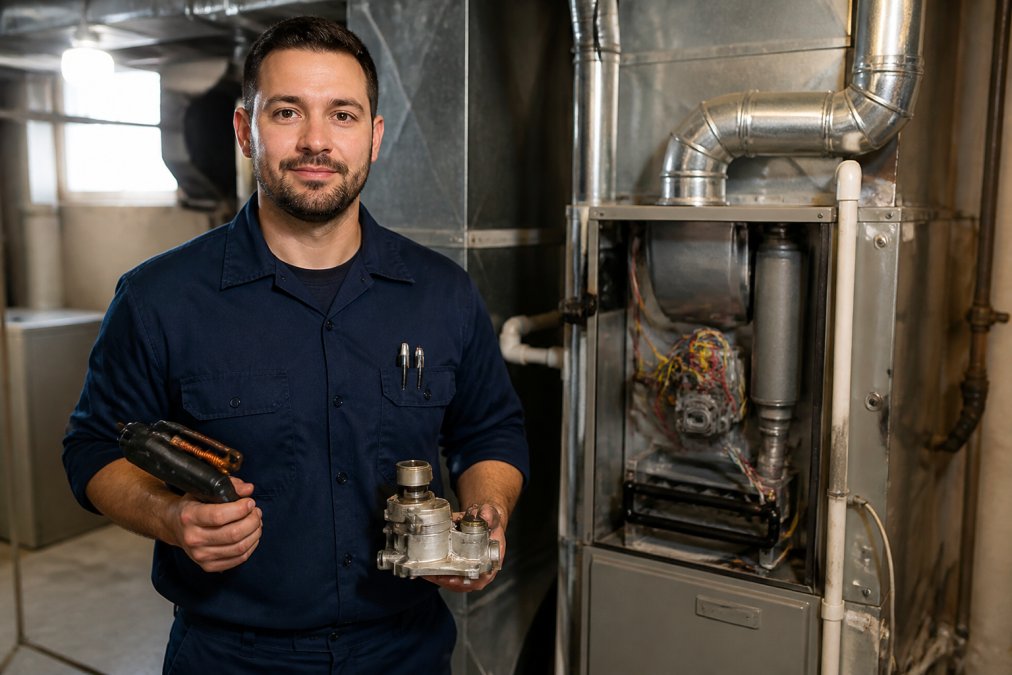
The technician begins with visual inspection of your HVAC equipment, checking for disconnected wires, loose connections, or visible damage. They’ll verify thermostat settings and use diagnostic equipment to measure system performance. For heating systems, they’ll check ignition and heat production. For cooling systems, they’ll measure refrigerant pressure and airflow. For heat pumps, they’ll test both modes.
If the problem isn’t immediately obvious, the technician performs detailed mechanical assessment, which typically takes 30 to 60 minutes. Once identified, they’ll explain the problem and provide a written estimate including parts, labor, and additional services. You have the right to ask questions and understand the work before authorizing the repair.
Upfront Pricing and Repair Estimates
The technician provides an estimate before starting work on any significant repair. This estimate itemizes parts costs, labor hours, and service fees. You have the right to decline if costs exceed your budget without being charged for diagnostics.
Upfront pricing means you know the total cost before work begins with no surprise charges. If additional problems are discovered during repair, the technician informs you and provides a new estimate before proceeding.
Anthony & Son Indoor Air Quality, LLC provides transparent upfront pricing so you understand exactly what you’re paying for. Our licensed technicians explain problems clearly and discuss repair options, including whether repair or replacement makes sense for your situation.
Energy Efficiency Rebates and Long-Term Savings
After your emergency repair, consider whether your system is nearing the end of its useful life. Many utility companies in DC offer rebates for upgrading to high-efficiency HVAC systems, reducing upfront costs by hundreds of dollars. Federal tax credits are available for installing certain high-efficiency equipment under the Inflation Reduction Act.
High-efficiency systems use less energy, reducing monthly utility bills. Over the system’s lifetime, energy savings can offset a significant portion of installation cost. A system costing more upfront but using 30% less energy typically pays for itself within 7 to 10 years.
Contact Anthony & Son Indoor Air Quality, LLC to discuss whether repair or replacement makes sense for your system and how a new high-efficiency system would reduce your energy costs.
When your heating or cooling system fails, you need a contractor you can trust to respond quickly with honest, transparent service. Emergency HVAC repair in DC doesn’t have to be stressful if you know what to expect and understand your options. Anthony & Son Indoor Air Quality, LLC specializes in emergency repair response and upfront pricing that protects you from surprise charges. Our licensed technicians diagnose problems accurately and explain repair options clearly so you can make informed decisions about your home’s comfort. Contact us today for emergency service or to schedule a preventative maintenance appointment that keeps your system running reliably all year long.
Frequently Asked Questions
What qualifies as an emergency HVAC situation versus a standard repair?
An emergency HVAC situation typically involves a complete loss of heating during winter, total cooling failure during summer, or safety hazards like gas leaks. Standard repairs include minor issues like thermostat malfunctions, refrigerant leaks that don't prevent operation, or noisy equipment. If your home is becoming dangerously cold or hot, or if you smell gas, call immediately. If the system is still running but performing poorly, you can usually schedule a regular appointment.
How much does emergency AC repair cost in DC?
Emergency AC repair costs in DC vary based on the problem, time of service, and parts needed. Service calls typically include a diagnostic fee, with repair costs depending on whether you need a simple fix like refrigerant recharge or a major component replacement like a compressor repair. For accurate pricing for your specific situation, contact Anthony & Son Indoor Air Quality, LLC for an upfront estimate before work begins.
Are DC landlords required to provide air conditioning?
DC housing code requires landlords to provide and maintain adequate heating systems, but air conditioning is not mandated in the same way. However, if a landlord provides AC, they must maintain it in working condition. Heating systems must maintain at least 68 degrees from November through March. Tenants should document heating failures and notify landlords immediately. If repairs aren't made within required timelines, tenants may have legal remedies under DC housing law.
How do I find a licensed and insured HVAC contractor in DC?
Look for contractors who are licensed by the District of Columbia Department of Energy and Environment and carry proof of liability insurance and bonding. Verify credentials directly with the licensing board, check customer reviews, and ask for references from recent jobs. Licensed technicians should provide upfront pricing, system diagnostics, and warranty information. Anthony & Son Indoor Air Quality, LLC is fully certified and equipped to handle residential and commercial emergency HVAC repair throughout DC.
This article was written using GrandRanker