
Table of Contents
- 10 Signs Your Furnace Needs Replacement
- 1. Your Furnace Is Older Than 15 Years
- 2. Rising Energy Bills With No Explanation
- 3. Frequent Repairs and Growing Costs
- 4. Strange Noises: Banging, Rattling, or Squealing
- 5. Uneven Heating and Cold Spots Throughout Your Home
- 6. Dust, Soot, or Rust Around the Furnace
- 7. Yellow or Flickering Burner Flame
- 8. Short Cycling or Frequent On-Off Cycling
- 9. Carbon Monoxide Detector Alarms
- 10. Weak Airflow and Poor Indoor Air Quality
- Average Furnace Lifespan: When Should You Start Planning?
- Signs of a Cracked Heat Exchanger: A Safety Priority
- Furnace Repair vs. Replacement Cost: The Financial Decision
- Energy Efficiency and AFUE Ratings: What Modern Systems Offer
- Smart Thermostat Integration and System Performance
- Environmental Impact and Responsible Replacement
- Preventative Maintenance Checklist to Extend System Life
Last Updated: August 11, 2026
10 Signs Your Furnace Needs Replacement
Your furnace is one of the most critical systems in your home, but many homeowners don’t recognize warning signs until a complete breakdown forces an emergency call. Understanding these indicators can save you thousands in unexpected repair costs and prevent uncomfortable or dangerous situations during heating season.
The average furnace lifespan is 15 to 20 years. If your system is approaching or has exceeded this age, paying attention to performance changes becomes essential. At Anthony & Son Indoor Air Quality, LLC, we help homeowners in Maryland, DC, and Northern Virginia identify whether their furnace needs replacement or maintenance.
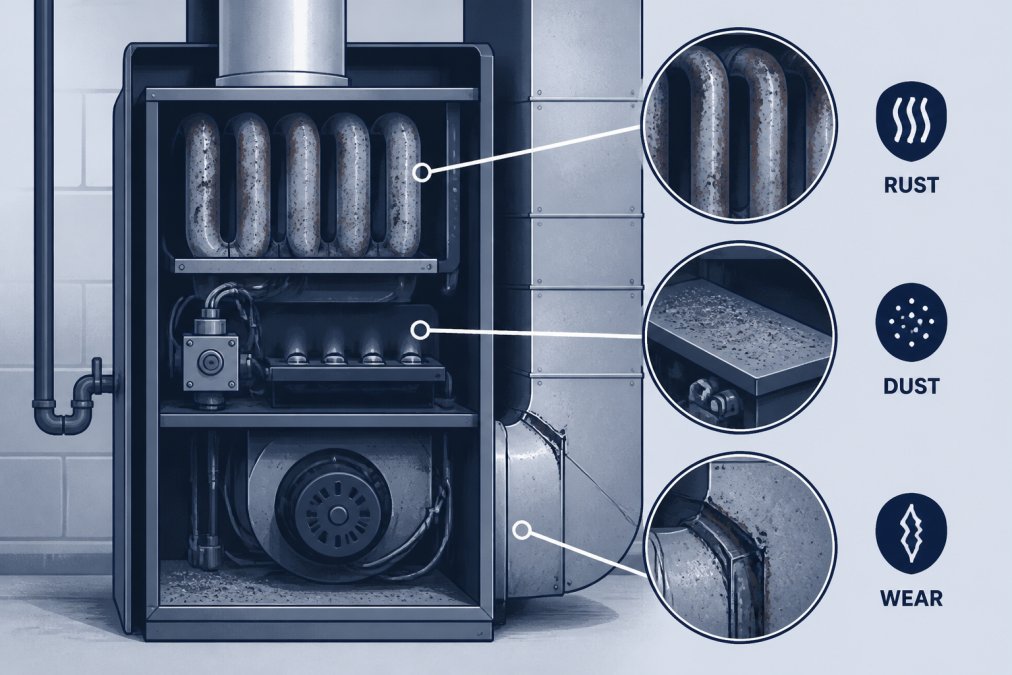
The 10 signs below represent the most common indicators that your system may need replacement rather than repair.
1. Your Furnace Is Older Than 15 Years
A furnace that has operated for 15 years or longer is entering its final stages of reliable service. Most manufacturers design furnaces to last between 15 and 20 years under normal operating conditions. Once a system crosses the 15-year threshold, repair costs accelerate and catastrophic failure risk increases significantly.
If your furnace was installed in 2011 or earlier, replacement planning should be underway. Waiting until complete failure leaves you vulnerable to expensive emergency service calls. Many homeowners find that replacing an aging furnace proactively prevents stress and expense during the coldest months.
2. Rising Energy Bills With No Explanation
A sudden increase in heating costs without corresponding usage changes suggests your furnace is losing efficiency. As components age, the heat exchanger becomes less effective at transferring heat. The system works harder to maintain temperature, consuming more fuel or electricity.
When energy bills climb 10-15% or more over consecutive heating seasons, furnace efficiency has likely declined. Many homeowners report that replacing an old furnace with a modern, high-efficiency model reduces heating costs by 20-30%.
3. Frequent Repairs and Growing Costs
Once your furnace begins needing repairs, frequency and cost typically increase. A common HVAC industry rule is the "50% rule": if repair cost exceeds 50% of a new system’s price, replacement is usually the better financial decision.
Frequent repairs indicate multiple components are wearing out simultaneously. When you call your HVAC technician multiple times per heating season, the system is signaling its useful life is ending. Replacement provides reliability and peace of mind for years to come.
4. Strange Noises: Banging, Rattling, or Squealing
Furnaces in good condition operate relatively quietly. Unusual sounds indicate mechanical problems. Banging or clanking often signals loosened parts or a cracked heat exchanger. Squealing typically comes from a blower motor bearing wearing out. Rattling can indicate loose panels or shifting components.
These noises are diagnostic signals. A furnace producing them is under stress, and the underlying cause usually makes replacement the more sensible choice than attempting another fix.
5. Uneven Heating and Cold Spots Throughout Your Home
If some rooms stay warm while others remain cold, your furnace may be failing to distribute heated air evenly. This occurs when the blower motor weakens or the heat exchanger becomes inefficient. The system cycles on and off more frequently, struggling to reach and maintain your set temperature.
When your thermostat is set to 70 degrees but one room stays at 62 degrees while another reaches 75 degrees, your furnace’s ability to condition your home has deteriorated significantly.
6. Dust, Soot, or Rust Around the Furnace
Visible soot or rust accumulation around your furnace indicates combustion problems or corrosion inside the system. Rust suggests moisture is present, accelerating deterioration of internal components. Soot around the furnace opening indicates incomplete combustion, a safety concern demanding immediate professional inspection.
Poor indoor air quality often accompanies these signs. If you notice rust or soot accumulation, professional inspection is essential to determine whether the furnace can be safely repaired or should be replaced.
7. Yellow or Flickering Burner Flame
A healthy burner flame should burn blue and steady. A yellow or flickering flame indicates incomplete combustion, meaning the furnace isn’t burning fuel efficiently and may be producing carbon monoxide. This is a serious safety hazard requiring immediate professional attention.
A yellow flame suggests the burner isn’t receiving the correct air-to-fuel ratio. While some causes can be repaired, a yellow flame in an older furnace often signals that the combustion chamber is failing and replacement is safer than repair.
8. Short Cycling or Frequent On-Off Cycling
Short cycling occurs when your furnace turns on and off more frequently than normal, never running long enough to heat efficiently. A furnace should cycle on for at least 10-15 minutes before shutting off. This behavior wastes energy and stresses components, particularly the blower motor and ignition system.
In older systems, short cycling often indicates a cracked heat exchanger or failing blower motor. Frequent cycling prevents your home from reaching consistent temperature and significantly increases energy consumption.
9. Carbon Monoxide Detector Alarms
A carbon monoxide alarm going off near your furnace is a critical safety signal. A properly functioning furnace vents this colorless, odorless gas safely outside. If your CO detector alarms, your furnace may have a cracked heat exchanger or blocked vent pipe.
Do not ignore this warning. Leave your home immediately, turn off the furnace if you can do so safely, and call emergency services or your HVAC company. If the furnace is determined to be the source, replacement is the only safe long-term solution.
10. Weak Airflow and Poor Indoor Air Quality
Weak airflow from your vents suggests the blower motor is failing or the furnace is struggling to push air through the system. Rooms may feel stuffy and air quality may decline. If you’ve had your ductwork cleaned and air filter replaced but airflow remains weak, the furnace’s blower motor or internal components are likely failing.
Average Furnace Lifespan: When Should You Start Planning?
The typical furnace lifespan ranges from 15 to 20 years, though some systems operate reliably for 25 years with excellent maintenance. Actual lifespan depends on installation quality, maintenance frequency, usage patterns, and proper sizing for your home.
A furnace that’s properly maintained with annual inspections, regular filter changes, and prompt repairs tends to reach the higher end of this range. If you don’t know your furnace’s age, check the manufacturer’s nameplate on the unit itself.
Planning replacement around year 12-14 is wise. This gives you time to research options, budget for the expense, and schedule installation during mild weather rather than facing an emergency replacement in winter.
Signs of a Cracked Heat Exchanger: A Safety Priority
The heat exchanger transfers combustion heat to the air circulating through your home. A cracked heat exchanger is one of the most serious furnace problems because it can allow carbon monoxide to enter your home’s living spaces.
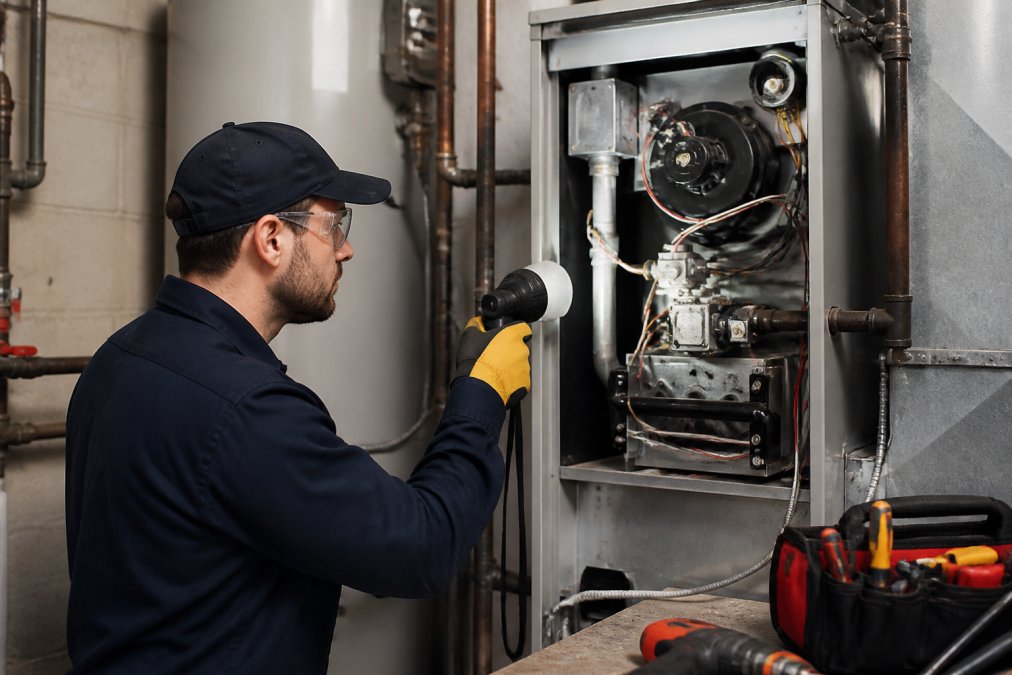
A cracked heat exchanger often produces visual and auditory signs. You may notice a burning smell, see soot or rust around the furnace, or hear banging or popping noises as metal expands and contracts. A trained technician using specialized diagnostic equipment can identify cracks.
If your furnace produces a yellow or flickering burner flame, emits soot, or triggers your carbon monoxide detector, a cracked heat exchanger may be responsible. This is not repairable; replacement is the only safe solution.
Furnace Repair vs. Replacement Cost: The Financial Decision
Deciding whether to repair or replace your furnace requires balancing immediate repair cost against long-term value of a new system.
When Repair Still Makes Sense
If your furnace is under 10 years old and repair cost is less than 25-30% of a new system’s cost, repair is usually the right choice. At this stage, the furnace has many years of useful life remaining.
Common repairs that make sense on younger systems include replacing a blower motor, repairing the thermostat, cleaning or replacing the burner, or fixing a cracked inducer fan.
However, if your furnace is 12 years or older and requires repair, consider the system’s trajectory. Is this the first repair or the third in two years? These factors should influence your decision.
When Replacement Is the Better Investment
The 50% rule provides a practical guideline: if a repair costs more than 50% of the price of a new furnace, replacement is typically the better investment. This threshold reflects the point at which you’re investing heavily in a system nearing the end of its useful life.
If your furnace is 15 years or older, replacement is almost always the better choice. A new furnace comes with a warranty, improved efficiency, and reliability.
The 50% Rule and Long-Term Savings
Consider a practical example: if a new furnace costs $4,000-$6,000 installed and a repair costs $2,500, you’ve reached the threshold where replacement makes financial sense. You’re paying half the cost of a new system to fix a furnace that may fail within the next few years. A new furnace eliminates this risk and provides years of reliable service.
Energy Efficiency and AFUE Ratings: What Modern Systems Offer
Modern furnaces are significantly more efficient than systems installed 15 or more years ago. AFUE (Annual Fuel Use Efficiency) ratings measure how much fuel your furnace converts to usable heat.
Older furnaces typically have AFUE ratings between 70-80%, meaning 20-30% of fuel is wasted. Modern furnaces commonly achieve AFUE ratings of 90-98%. A furnace with a 95% AFUE rating will heat your home using roughly 5% of the fuel that an 80% AFUE system requires to produce the same output. Over a furnace’s 15-20 year lifespan, this efficiency gain can reduce heating costs by thousands of dollars.
Smart Thermostat Integration and System Performance
Modern furnaces integrate seamlessly with smart thermostats, allowing you to optimize heating schedules, monitor energy consumption, and receive system alerts. A smart thermostat can learn your preferences, adjust temperatures automatically based on occupancy, and provide detailed usage data through a mobile app.
When paired with a new, efficient furnace, a smart thermostat helps you extract maximum performance from your heating system. Many homeowners report that smart thermostat integration reduces energy consumption by an additional 10-15% compared to manual control.
Older furnaces don’t integrate well with modern smart thermostats. Replacing an aging furnace with a new system that supports smart controls unlocks these performance and savings benefits.
Environmental Impact and Responsible Replacement
Replacing an old furnace with a modern, high-efficiency system reduces your home’s carbon footprint. A furnace operating at 95% AFUE produces significantly less emissions per unit of heat than a system operating at 75% AFUE.
Modern furnaces use environmentally safer refrigerants and materials. Responsible replacement ensures your heating system meets current environmental standards and reduces your home’s overall energy consumption.
Preventative Maintenance Checklist to Extend System Life
Even if your furnace isn’t showing signs of imminent failure, preventative maintenance extends its lifespan and helps you catch problems early.
| Maintenance Task | Frequency | Why It Matters |
|---|---|---|
| Replace air filter | Every 1-3 months | Prevents airflow restriction and strain on blower motor |
| Annual professional inspection | Once per year | Identifies wear, combustion issues, and safety concerns |
| Clean burner and combustion chamber | Every 2-3 years | Ensures efficient combustion and prevents soot accumulation |
| Inspect heat exchanger | Annually | Detects cracks or corrosion before they cause safety issues |
| Check thermostat calibration | Annually | Ensures accurate temperature control and prevents short cycling |
| Inspect ductwork for leaks | Every 2-3 years | Improves system efficiency and indoor air quality |
| Clean blower motor and fan | Every 2-3 years | Maintains airflow and reduces strain on motor |
Professional maintenance from a certified HVAC technician catches problems that homeowners miss. During an annual inspection, a technician checks combustion efficiency, inspects the heat exchanger for cracks, tests carbon monoxide levels, and identifies components showing wear.
Schedule your annual furnace inspection in early fall, before the heating season begins. This timing allows any necessary repairs to be completed before cold weather arrives, and it ensures your furnace is operating at peak efficiency when you need it most.
At Anthony & Son Indoor Air Quality, LLC, our certified technicians perform thorough annual inspections that identify potential problems before they become emergencies. We help homeowners understand their furnace’s condition and plan replacement when the time is right.
Frequently Asked Questions
How many years do furnaces typically last?
Most furnaces have a system lifespan of 15 to 20 years with proper maintenance. However, some well-maintained systems can reach 25 years. After 15 years, efficiency typically declines and repair costs increase. The average furnace lifespan depends on installation quality, frequency of preventative maintenance, and how often the system runs. Once your furnace approaches 15 years, start budgeting for replacement and monitor for warning signs of declining performance.
What are the safety risks of an old furnace?
The primary safety risk is carbon monoxide leaks from a cracked heat exchanger. As furnaces age, metal components corrode and develop cracks, allowing combustion gases to enter your home's air supply. A carbon monoxide detector is essential if your furnace is over 10 years old. Yellow or flickering burner flames, soot accumulation, and rust around the furnace also signal potential safety hazards. Any of these signs require immediate professional inspection by a certified HVAC technician.
Is it worth repairing a furnace that is 15 years old?
At 15 years, repair costs versus replacement depends on the repair type and your system's overall condition. If the repair costs less than 50% of a new furnace installation and your system is otherwise reliable, repair may be worth it short-term. However, if repairs are frequent, your energy bills are rising, or the heat exchanger shows signs of damage, replacement is the smarter long-term investment. Newer furnaces have higher AFUE ratings, meaning lower energy consumption and utility bills over time.
Should a 20-year-old furnace be replaced?
Yes. A 20-year-old furnace is beyond its typical system lifespan and presents both reliability and safety risks. At this age, efficiency loss means significantly higher utility bills, repair costs are likely to increase, and the risk of a cracked heat exchanger is substantial. Modern furnaces offer 90%+ AFUE ratings compared to older systems at 60-80%, saving you money on energy costs. Replacement eliminates safety concerns and improves heating consistency throughout your home.
What does AFUE rating mean for my furnace replacement?
AFUE (Annual Fuel Utilization Efficiency) measures how much of the fuel your furnace burns actually heats your home. Older furnaces often have 60-80% AFUE, meaning 20-40% of energy is wasted. Modern furnaces achieve 90-98% AFUE, converting nearly all fuel to usable heat. A higher AFUE rating directly reduces your utility bills. Upgrading from an 80% AFUE system to a 95% AFUE system can save 15-20% on heating costs annually, which adds up significantly over the furnace's lifespan.
Can smart thermostat integration improve an old furnace's performance?
Smart thermostats can optimize an older furnace's operation and reduce energy waste, but they cannot overcome fundamental efficiency loss in aging systems. A smart thermostat prevents short cycling, adjusts temperature based on occupancy, and provides usage data. However, if your furnace has a cracked heat exchanger, weak airflow, or poor combustion efficiency, a smart thermostat won't fix these issues. For systems over 15 years old, replacement combined with a smart thermostat delivers maximum energy savings and comfort.
What should I do if my furnace is making strange noises?
Strange noises like banging, rattling, or squealing indicate mechanical wear. Banging often signals a cracked heat exchanger or failing blower motor. Rattling suggests loose components or deteriorating ductwork. Squealing points to a worn blower motor bearing. Any of these sounds require immediate professional inspection. If your furnace is over 10 years old and making noise, replacement is often more cost-effective than repair. Newer systems run quieter and more efficiently, improving comfort and reliability.
Recognizing signs your furnace needs replacement protects your home’s comfort, your family’s safety, and your long-term budget. If your furnace is approaching 15 years of age, is requiring frequent repairs, or is showing any of the warning signs outlined above, professional evaluation is essential. Contact Anthony & Son Indoor Air Quality, LLC today for a comprehensive furnace inspection and honest assessment of whether repair or replacement is the right choice for your situation.
This article was written using GrandRanker