
Table of Contents
- How Much Does Ductwork Replacement Cost for a 2026 Sq Ft Home?
- Ductwork Replacement vs. Repair: Which Do You Need?
- 7 Signs You Need New HVAC Ductwork
- Hidden Costs That Affect the Price of HVAC Ductwork
- How Long Does Ductwork Replacement Take?
- DIY vs. Professional Ductwork Installation
- Get an Accurate Quote for Your Home
- Frequently Asked Questions
Last Updated: September 9, 2026
How Much Does Ductwork Replacement Cost for a 2026 Sq Ft Home?
Replacing the HVAC ductwork in a 2026 sq ft home is a significant investment, typically ranging from several thousand dollars into the five-figure territory depending on materials, layout, and accessibility. Your actual quote depends on linear footage, material selection, and a host of property-specific conditions we break down below.
This guide breaks down the cost to replace HVAC ductwork in a 2026 sq ft home into its core components, so you know exactly what you are paying for and why prices vary so widely between contractors.
Cost Breakdown: Materials vs. Labor
Labor typically accounts for the largest portion of your total bill, often more than half of the final price. This covers the time for a load calculation, removing old ductwork, planning the new layout, and the physical installation.
Material costs make up the remainder and vary based on what you choose. Here is a general sense of how the cost to replace HVAC ductwork in a 2026 sq ft home allocates between the two:
| Cost Component | Typical Share of Total | What It Covers |
|---|---|---|
| Labor | 50-65% | Removal, load calculation, installation, sealing |
| Materials | 35-50% | Ductwork, fittings, insulation, tape, hangers |
| Permits & Misc. | 5-10% | Local permit fees, minor structural adjustments |
Cost per Linear Foot by Material Type
The material you choose is the single biggest driver of per-foot cost.
- Flexible ducting is the most budget-friendly option. It consists of a wire coil covered in plastic and insulation. It is quick to install, which lowers labor time, but it must be properly supported and kept as straight as possible. Expect this to be the lowest cost per linear foot.
- Rigid sheet metal is the premium choice. It is durable, easy to clean, and provides the smoothest interior surface for optimal airflow. It costs more per linear foot and takes longer to install, but it is the standard for longevity and performance.
- Fiberglass duct board sits in the middle. It offers good insulation properties and sound dampening, but requires careful fabrication and sealing to prevent air leaks and fiber erosion over time.
A typical 2026 sq ft home might have anywhere from 100 to 200 linear feet of ductwork. The total cost to replace HVAC ductwork in a 2026 sq ft home is directly proportional to this linear footage, so an accurate measurement is the first step in any estimate.
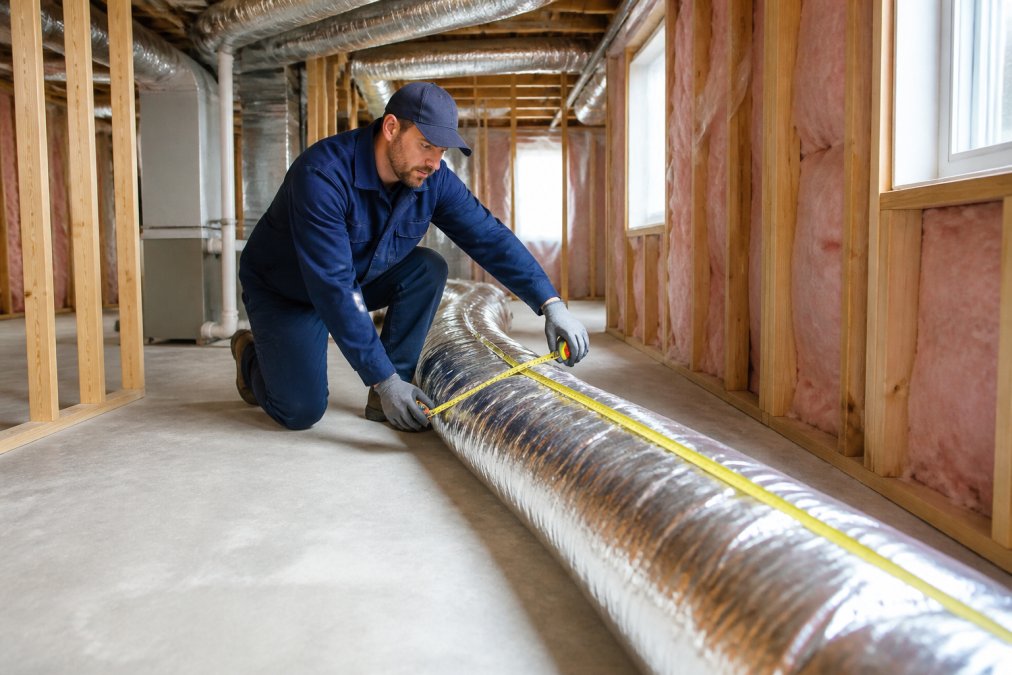
When comparing quotes, ask for the price per linear foot broken out by material and labor. If a contractor gives you a single lump sum, they are likely protecting a high margin or have not done a proper measurement.
Ductwork Replacement vs. Repair: Which Do You Need?
The decision between ductwork replacement vs repair comes down to the condition of the ducts and the age of the system. If you have isolated damage, such as a single disconnected joint or a small tear in flexible ducting, a repair is often sufficient.
However, replacement becomes the better value when the ductwork is aging, poorly designed, or extensively damaged. According to guidance from the U.S. Department of Energy on duct sealing, sealing and insulating ducts can improve the efficiency of your HVAC system, but it also notes that ducts in unconditioned spaces should be properly insulated to prevent energy loss. If your ducts are leaking at the joints, crushed in the attic, or undersized for your system, patching them is just delaying the inevitable. You will pay for repairs now and a replacement later.
A contractor should pressure-test the system and visually inspect all accessible runs. If more than a third of the ductwork is compromised, replacement is almost always the more cost-effective path forward.
7 Signs You Need New HVAC Ductwork
Look for these seven signs that your ductwork has reached the end of its service life.
- Rooms that are always too hot or too cold, indicating poor airflow distribution or undersized branches.
- Visible damage, such as sagging flexible ducts, crushed sections, or disconnected joints in the attic or crawl space.
- Dusty rooms and poor air quality, even shortly after cleaning, suggests leaky ducts are pulling in contaminants from unconditioned spaces.
- High energy bills that climb despite regular HVAC maintenance, pointing to significant energy loss through leaks.
- Strange noises, like rattling or whistling, coming from the walls or ceiling when the system runs.
- A history of pests in the ductwork, which can leave behind debris, dander, and damage that is impractical to fully clean.
- Ductwork older than 15-20 years, especially if it is the original system in an older home, as materials degrade and insulation R-value drops over time.
If you are experiencing several of these issues simultaneously, the cost to replace HVAC ductwork in a 2026 sq ft home is likely justified by the improvement in comfort and monthly utility savings.
Hidden Costs That Affect the Price of HVAC Ductwork
Several hidden factors can add to the final cost to replace HVAC ductwork in a 2026 sq ft home, and a reputable contractor will flag these during the inspection. Understanding these potential adders before you sign a contract prevents budget surprises.
Remediation Costs: Asbestos and Mold
If your home was built before the 1980s, the old ductwork may contain asbestos insulation or mold. Both require specialized handling before any new installation can begin.
Asbestos Abatement
Asbestos was commonly used to insulate ductwork in homes built from the 1930s through the 1970s. The material is dangerous when disturbed because the fibers can become airborne and cause serious respiratory diseases.
- When It Applies: If your ductwork has a white, fibrous wrapping that looks like old pipe insulation, or if the duct tape used on the joints is a gray, cloth-like material, asbestos may be present.
- Cost Impact: Professional asbestos abatement for ductwork typically adds $500 to $1,500 to your project, depending on the amount of material and the accessibility of the duct runs. This cost covers the certified abatement contractor’s labor, specialized disposal, and air quality testing after removal.
- Process: The abatement contractor must seal off the work area, wet the material to prevent fiber release, carefully remove it, and dispose of it at a licensed facility. The area must then pass a visual inspection and, in some cases, an air test before new ductwork installation can begin.
Mold Remediation
Mold inside ductwork is a common finding in humid climates and in homes where the air conditioner has had condensation issues.
- When It Applies: Visible mold growth on the interior of ducts, a musty odor coming from the vents, or a history of condensation problems on the duct surface.
- Cost Impact: Professional mold remediation of ductwork adds $500 to $2,000 to your project. The cost depends on the extent of the growth and whether the mold has spread to the HVAC equipment itself, which may require additional cleaning or component replacement.
- Process: Remediation involves sealing the affected duct sections, applying an antimicrobial treatment, and physically removing the mold growth. In severe cases, the contaminated duct sections are removed entirely, which is often the case when you are already planning a full replacement.
The Environmental Protection Agency’s resources on asbestos in the home provide clear guidance on why professional abatement is necessary rather than attempting DIY removal. Attempting to remove asbestos or mold yourself not only puts your health at risk but can also create legal liability if the material is not disposed of properly.
Smart Zoning and Damper Integration
Adding HVAC zoning with motorized dampers allows you to control temperatures in different parts of the house independently. This requires additional ductwork design, control wiring, and a thermostat system capable of managing multiple zones.
- Cost Impact: Adding a two-zone system to a 2026 sq ft home typically adds $800 to $2,500 to your ductwork replacement project. This includes the cost of motorized dampers (typically $150 to $300 each), additional control wiring, and a compatible smart thermostat.
- ROI Consideration: While zoning increases your upfront cost, it directly addresses comfort complaints and can reduce energy waste by conditioning only the spaces you are using. The U.S. Department of Energy notes that zoning can save 10-30% on heating and cooling costs in homes where unoccupied rooms are regularly conditioned (energy.gov). For a 2026 sq ft home with monthly energy bills of $150 to $250, that translates to potential savings of $15 to $75 per month, meaning the zoning investment can pay for itself in 1 to 5 years depending on your usage patterns.
- Installation Considerations: Zoning works best when the ductwork is designed with separate supply runs to each zone. During a full replacement, the contractor can install the dampers at the branch points where the main trunk splits to serve different areas of the home. This is far more cost-effective than retrofitting dampers into existing ductwork later.
If your contractor discovers asbestos or mold during the removal phase, work will stop until the area is remediated. This can add days to your project timeline. Always ask your contractor upfront whether they will include a contingency clause in the contract for unexpected remediation costs, so you are not hit with an open-ended bill.
How Long Does Ductwork Replacement Take?
Most ductwork replacement projects for a 2026 sq ft home take between one and three days of active work.
Day one typically involves removing the old ductwork and preparing the space. Day two is the bulk of the new installation, running the main trunk lines and branch ducts. Day three is reserved for connections, sealing, and testing the system. A straightforward attic installation with flexible ducting can be done in a single day, while a complex retrofit installation in a home with limited access can stretch to three days or more. Always ask for the estimated timeline in writing before work begins so you can plan accordingly.
DIY vs. Professional Ductwork Installation
Attempting to replace your own HVAC ductwork is rarely a good idea. It requires a proper HVAC load calculation to determine the correct duct sizes, an understanding of static pressure and airflow efficiency, and the tools to fabricate and seal connections that will not leak.
Improperly sized ducts can starve your HVAC system of airflow, leading to premature failure of the equipment. Poorly sealed joints waste energy and pull contaminated air from crawl spaces and attics into your living space.
A licensed HVAC contractor brings the expertise to design a system that matches your home’s specific needs. They handle permits, ensure the work meets local building codes, and stand behind the installation.
Get an Accurate Quote for Your Home
Understanding the factors that drive the cost to replace HVAC ductwork in a 2026 sq ft home puts you in a strong position to evaluate contractor bids. Look for a contractor who performs a thorough inspection, provides a detailed written estimate, and can explain the reasoning behind their ductwork design.
At Anthony & Son Indoor Air Quality, LLC, our fully certified and extensively trained technicians specialize in complete HVAC system installation and replacement. We use industry-leading equipment and proven techniques to improve your system’s efficiency and performance, and our staunch dedication to honesty and integrity means you get a straight answer about whether you need a repair or a full replacement. We are up-to-date on the latest HVAC technologies, including smart zoning and damper integration, to solve uneven temperature issues in older homes.
Frequently Asked Questions
How much does it cost to replace ductwork in a 2,000 sq ft house?
For a home near 2,000 square feet, the total cost of HVAC ductwork replacement generally falls between $2,500 and $6,000. This range depends on the linear footage needed, the material you choose, and local labor rates. A 2,026 sq ft home sits right in this bracket, so getting a detailed on-site estimate is the only way to know your exact price.
Should I replace 20-year-old ductwork?
If your ductwork is 20 years old, replacement is often worth the investment. Older systems typically use lower-grade materials that degrade, leak air, and harbor dust and allergens. If you notice uneven temperatures, high energy bills, or visible damage, new ducts will improve airflow efficiency and indoor air quality, often paying for themselves through energy savings.
Does replacing ductwork improve energy efficiency?
Yes. Leaky ducts can waste up to 30% of the air moving through your HVAC system, forcing it to work harder and increasing your utility bills. New, properly sealed ductwork ensures conditioned air reaches every room, reducing static pressure and energy loss. Most homeowners see measurable improvement in both comfort and monthly energy costs after replacement.
How often should residential ductwork be replaced?
Residential ductwork typically lasts 15 to 25 years with proper maintenance. However, the actual lifespan depends on material quality, installation, and conditions like moisture or pest damage. If you have frequent repairs, notice musty odors, or see visible deterioration, have a licensed HVAC contractor inspect the system to determine if replacement is more cost-effective than continued repairs.
Replacing your ductwork is a major decision, and the wide range of potential costs can feel overwhelming. You need a partner who will assess your home honestly and recommend the solution that fits your budget without cutting corners. Contact Anthony & Son Indoor Air Quality, LLC today for a thorough inspection and a transparent quote, and get the lasting comfort and improved indoor air quality your home deserves.