
Table of Contents
- HVAC Repair vs System Replacement: When to Fix, When to Replace
- The HVAC Repair vs Replace Rule of Thumb
- Signs Your HVAC Needs Replacing
- Average Cost of HVAC Repair vs Replacement
- Key Factors in the Repair vs Replacement Decision
- Financing, Rebates, and Tax Credits for HVAC Replacement
- Maintenance History: How It Affects Your Decision
- Smart Home Integration and Indoor Air Quality Upgrades
Last Updated: August 8, 2026
HVAC Repair vs System Replacement: When to Fix, When to Replace
The decision between repairing your HVAC system and replacing it entirely comes down to one critical question: will you spend money fixing something that’s nearing the end of its life, or invest in a new system that could serve you for the next 15-20 years? This choice affects your comfort, your energy bills, and your wallet. At Anthony & Son Indoor Air Quality, LLC, we help homeowners and businesses in Maryland, DC, and Northern Virginia make this decision based on real data, not guesswork.
The hvac repair vs system replacement cost equation isn’t just about the immediate price tag. It’s about understanding when a repair buys you time and when it’s throwing good money after bad. We’ve seen homeowners spend thousands extending the life of an aging system, only to face a complete failure months later. We’ve also seen others replace perfectly serviceable equipment because they didn’t understand their actual options.
This guide breaks down the real costs, the decision factors that matter, and the financial tools available to make replacement more affordable. Whether you’re facing an emergency breakdown or planning ahead, you’ll find the framework to choose confidently.
The 50% rule gives you a quick starting point: if annual repair costs exceed 50% of replacement cost, replacement usually makes financial sense. But that’s just the beginning, age, efficiency gains, and your maintenance history all shift the equation.
The HVAC Repair vs Replace Rule of Thumb
The most common decision framework is the 50% rule. If the cost to repair your system exceeds 50% of the cost to replace it, replacement becomes the smarter financial move. Here’s why: a major repair might extend your system’s life by 2-3 years, while a new system lasts 15-20 years. Spending $3,000 to fix a 15-year-old furnace doesn’t make sense if replacement costs $6,000, you’re gambling that nothing else breaks before the system dies naturally.
But this rule assumes you’ll stay in your home long enough to recoup the replacement investment. If you’re selling in two years, a $3,000 repair might be the right call even if replacement would be cheaper long-term. Location matters too. In Maryland, DC, and Northern Virginia, heating and cooling systems run hard through extended seasons, which accelerates wear.
The rule also doesn’t account for efficiency gains. A new HVAC system with higher SEER ratings can cut your cooling costs by 20-40% compared to a 10-year-old unit. If you’re paying $150 per month in cooling costs, that’s real money recovered over time.
The 50% rule is a starting point, not a final answer. A system that’s already had multiple major repairs in the past two years is a warning sign, the next failure could come within months, making even a “cheap” repair a bad bet.
Signs Your HVAC Needs Replacing
Certain warning signs indicate your system is approaching the end of its useful life. Age is the most obvious factor, but frequency of repairs, rising utility bills, and performance issues all point toward replacement.
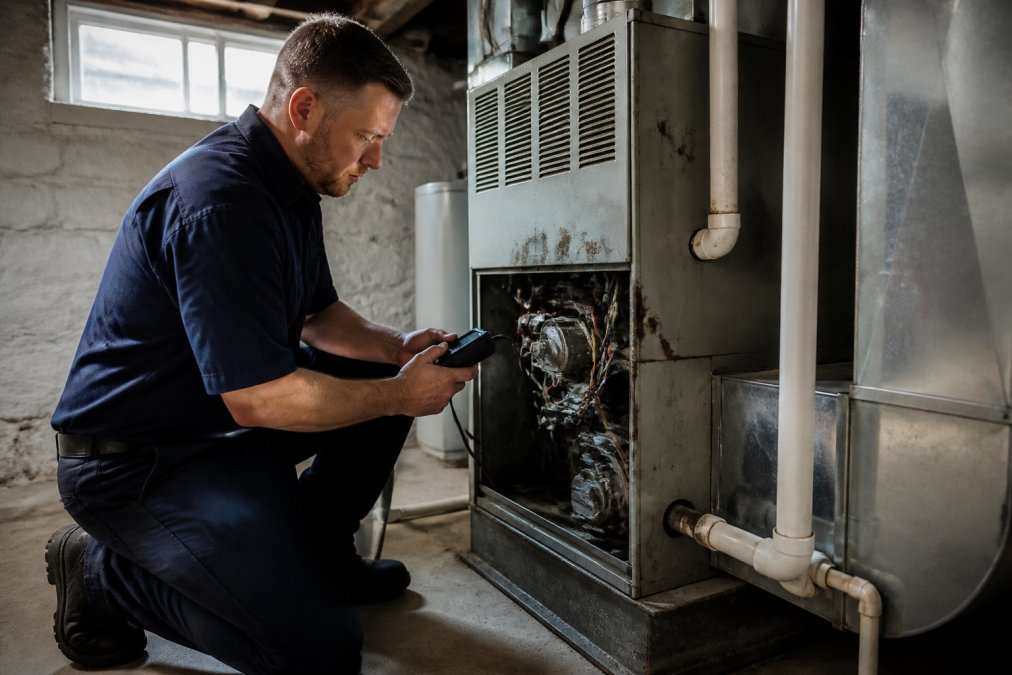
Age of the Equipment
Most HVAC systems last 15-20 years with regular maintenance. Once a system crosses the 15-year mark, replacement becomes increasingly practical. By year 18-20, the system is living on borrowed time.
Why age matters: older equipment uses outdated refrigerants, less efficient compressors, and components that are harder to source when they fail. Repair parts for systems built before 2010 are becoming scarce. If your technician tells you they need to special-order a part, that’s a signal your system is aging out of the market.
Knowing your system’s age is the first step. Check the nameplate on your outdoor unit or furnace, it shows the manufacture date. If you’ve owned the home for years and don’t know when the system was installed, ask a technician during a maintenance visit.
Frequency of Breakdowns
If your system needed repairs twice in the past 12 months, replacement is worth serious consideration. Systems don’t fail randomly, they fail because components are wearing out. Once one component fails, others typically follow within months or a few years.
A single repair is normal. Two repairs in a year suggests accelerating decline. Three or more repairs in two years almost always means replacement makes financial sense.
Track your repair history. Write down what broke, when it happened, and what it cost. This creates a clear picture of whether you’re dealing with isolated issues or systemic failure.
Rising Utility Bills and Energy Efficiency
Your energy bills tell a story. If your heating or cooling costs have climbed 15-20% in the past two years while your usage patterns haven’t changed, your system’s efficiency is declining. This happens as compressors wear, refrigerant leaks develop, and components lose their ability to transfer heat effectively.
A newer HVAC system with high SEER ratings (Seasonal Energy Efficiency Ratio) delivers dramatic savings. An older system might have a SEER rating of 10-12. Modern systems start at SEER 16 and go higher. That difference translates to measurable monthly savings on your utility bills.
Energy efficiency improvements also qualify for federal tax credits and rebates in many cases, which we’ll cover in the financing section below.
Average Cost of HVAC Repair vs Replacement
Understanding the actual costs involved removes guesswork from the decision. Repair costs vary widely based on what’s broken. Replacement costs depend on system type, capacity, and installation complexity.
Common HVAC Repair Costs
Repair costs typically range from $300 to $2,500 depending on the component. A capacitor replacement might cost $400-600. A compressor failure, the most expensive single repair, can run $1,200-2,500. Refrigerant leaks require diagnosis, repair, and recharging, typically $500-1,200.
Blower motor replacement runs $500-1,500. Heat exchanger repair or replacement in a furnace can exceed $2,000. The cost depends on whether the component can be repaired or must be replaced entirely.
Labor typically accounts for 40-60% of the repair bill. A technician needs to diagnose the problem, obtain parts, and perform the work. Emergency calls outside business hours cost more, sometimes significantly more.
Full System Replacement Costs
Full system replacement includes the outdoor unit (air conditioner or heat pump), the indoor unit (furnace or air handler), thermostat, and installation labor. Total costs typically range from $5,000 to $15,000 for residential systems, depending on equipment quality and installation complexity.
A basic system replacement might cost $6,000-8,000. Mid-range systems with better efficiency ratings run $8,000-12,000. Premium systems with advanced features and high SEER ratings can exceed $12,000-15,000.
Installation complexity adds cost. If your home has existing ductwork in good condition, installation is straightforward. If ducts need repair, modification, or if you’re converting from one system type to another, costs climb. Older homes with non-standard ductwork sometimes require significant modifications.
Geographic factors matter. Labor costs in DC metro areas are typically higher than in rural regions. Seasonal demand affects pricing, spring and summer bring premium pricing for installation.
Get multiple quotes before deciding. Prices vary significantly between contractors. A quote that’s substantially lower than others may indicate the contractor is cutting corners on installation quality or equipment specifications, ask detailed questions about what’s included.
Key Factors in the Repair vs Replacement Decision
Beyond the 50% rule and age, several other factors shift the equation toward repair or replacement.

System Capacity and Load Calculation
An undersized or oversized HVAC system creates comfort problems and wastes energy. A proper load calculation determines what size system your home actually needs based on square footage, insulation, window area, and local climate.
Many older systems were installed without proper load calculations. They might be oversized, cycling on and off frequently, or undersized, running constantly without reaching comfortable temperatures. This is especially common in older homes in Germantown and Rockville where HVAC systems were installed decades ago.
If your current system can’t maintain consistent temperatures across your home, some rooms are freezing while others are too hot, the problem might not be the system itself but its sizing. A replacement gives you the opportunity to right-size your system and solve comfort issues that have plagued your home for years.
Warranty Coverage and Future Protection
New systems come with manufacturer warranties covering parts (typically 5-10 years) and labor (typically 1-5 years). This protection is valuable. If something fails in year three, you’re covered.
Older systems are past warranty. Any repair is out-of-pocket. A new system gives you peace of mind and protection against unexpected costs.
Some contractors offer extended warranties on repairs, but these are limited. A new system’s warranty is comprehensive and comes from the manufacturer.
Refrigerant Type and Availability
Older systems use R-22 refrigerant, which is being phased out. R-410A became the standard replacement, and newer systems use even more efficient refrigerants. R-22 is becoming scarce and expensive. If your system needs R-22, repair costs are climbing because the refrigerant itself is expensive.
If your system uses R-22 and needs a refrigerant recharge, you’re looking at $300-600 just for the refrigerant. If the compressor fails and needs replacement, you might need to convert the entire system to a different refrigerant, a major undertaking.
New systems use modern refrigerants that are more efficient and will be available for decades.
Financing, Rebates, and Tax Credits for HVAC Replacement
One barrier to replacement is the upfront cost. Federal incentives, state programs, and financing options can make replacement more affordable than it appears.
The federal government offers tax credits for HVAC system replacements that meet efficiency standards. These credits can offset a portion of your installation cost. Maryland and Northern Virginia have additional state-level rebates through utility companies and energy efficiency programs.
Many HVAC contractors offer financing options, 0% interest plans for 12-24 months, or traditional loans. Some utilities offer rebate programs that reduce the cost of high-efficiency systems. A qualified contractor can help you navigate these options and identify what you qualify for.
The key is factoring these incentives into your replacement cost calculation. A $10,000 system might net to $7,000-8,000 after tax credits and rebates, which significantly changes the repair vs. replacement equation.
Ask your contractor about all available incentives before finalizing your decision. Rebate programs change annually, and eligibility depends on system type, efficiency rating, and your location. A contractor familiar with Maryland, DC, and Northern Virginia programs will know what applies to your situation.
Maintenance History: How It Affects Your Decision
Your system’s maintenance history reveals a lot about its remaining lifespan. Systems that receive annual preventative maintenance last longer and fail less frequently than neglected systems.
If your system has received regular maintenance, seasonal tune-ups, filter changes, and inspections, it’s more likely to have years of useful life remaining. Even if it’s 12-14 years old, consistent maintenance extends its lifespan.
Conversely, a system that’s been neglected, no maintenance, filters never changed, no inspections, ages faster. A 10-year-old neglected system might be in worse condition than a 15-year-old well-maintained system.
When evaluating repair vs. replacement, ask your technician about your system’s condition relative to its age. If maintenance has been poor, replacement becomes more attractive because the system’s true remaining lifespan is shorter than its chronological age.
This is where Anthony & Son Indoor Air Quality, LLC’s preventative maintenance programs make a difference. Regular maintenance catches small problems before they become expensive failures, extends system lifespan, and helps you avoid premature replacement.
Smart Home Integration and Indoor Air Quality Upgrades
A new HVAC system is an opportunity to upgrade beyond basic heating and cooling. Smart thermostats, zoning systems, and indoor air quality improvements add value and comfort.
A smart thermostat learns your schedule and adjusts temperatures automatically, reducing energy waste. Zoning systems allow you to heat or cool specific areas of your home independently, solving the problem of rooms that are too hot or too cold.
Indoor air quality upgrades, air purifiers, humidifiers, UV lights, and ventilation improvements, address air quality concerns. If tenants in your commercial property have complained about air quality, or if your family has allergy or respiratory issues, these upgrades make a real difference.
These additions increase the upfront cost of replacement but deliver ongoing benefits. They’re worth considering as part of your replacement decision, especially if your current system doesn’t support them.
Making the choice between repair and replacement comes down to three questions: What’s the repair cost versus replacement cost? How old is your system, and how frequently has it failed? How much longer do you plan to stay in your home or business?
If you’re facing this decision in Maryland, DC, or Northern Virginia, contact Anthony & Son Indoor Air Quality, LLC for a professional assessment. Our licensed technicians can evaluate your system’s condition, run the numbers on repair versus replacement, and help you understand what financing and rebate options apply to your situation. We’ll give you honest advice based on your specific circumstances, not a sales pitch. Get started with a consultation and discover how we can improve your comfort and efficiency year-round.
Frequently Asked Questions
What is the 50% rule for HVAC repair vs replacement?
The 50% rule is a straightforward guideline: multiply the age of your HVAC system in years by the repair cost. If that total exceeds 50% of the replacement cost, replacement is usually more cost-effective long-term. For example, a 10-year-old system with a $500 repair would equal $5,000 (10 × $500). If a new system costs $8,000-$10,000, replacement makes financial sense because you'll avoid future repairs and enjoy better energy efficiency.
How much does HVAC repair typically cost?
Average HVAC repair costs range from $150-$500 for simple fixes like thermostat replacement or refrigerant recharge, to $1,000-$3,000 for major component failures such as compressor or heat exchanger replacement. Emergency or after-hours service calls usually cost more. The exact price depends on the specific problem, system type, and local labor rates. Contact a certified technician for a detailed diagnosis and quote.
Is it worth repairing a 15-year-old HVAC system?
Most HVAC systems last 15-20 years. At 15 years, your system is nearing the end of its typical lifespan. If repair costs exceed 50% of replacement cost, or if you've had multiple breakdowns in recent years, replacement is usually wiser. However, if the repair is minor and your system has been well-maintained, a single repair may still be justified. A professional assessment will clarify whether repair or replacement makes sense for your situation.
What rebates and tax credits are available for HVAC replacement?
Federal tax credits for HVAC systems are available through the Inflation Reduction Act, offering up to $3,200 for heat pump installation on qualifying homes. Many states, utilities, and local programs offer additional rebates for high-efficiency systems. ENERGY STAR-certified units may qualify for further incentives. Eligibility depends on income, location, and equipment efficiency ratings. Contact your local utility or a certified contractor to explore current programs and maximize your savings.
This article was written using GrandRanker