
Table of Contents
- Why Commercial HVAC Maintenance Matters for Office Buildings
- Commercial HVAC Maintenance Checklist: Essential Tasks
- How Often Should You Schedule Commercial HVAC Service Frequency
- Understanding Commercial HVAC Maintenance Contract Cost and Budgeting
- Preventative Maintenance vs. Emergency Repairs: What Saves Money
- Smart Building Integration and Energy Efficiency
- Signs Your Office HVAC System Needs Professional Service
- Choosing a Certified Commercial HVAC Contractor
Last Updated: August 10, 2026
Why Commercial HVAC Maintenance Matters for Office Buildings
A commercial HVAC system breakdown mid-summer costs productivity: employees in uncomfortable conditions make more mistakes and seek jobs elsewhere. Beyond comfort, the stakes involve energy consumption, system reliability, and the difference between planned repairs and emergency calls at 2 a.m. on Friday.
Commercial HVAC maintenance isn’t optional upkeep, it’s the foundation that keeps your building efficient, tenants satisfied, and equipment lasting years longer. At Anthony & Son Indoor Air Quality, LLC, we’ve seen how preventative maintenance versus reactive repairs can mean tens of thousands of dollars across a facility’s lifetime.
Most office managers face a simple challenge: they don’t know what they don’t know. When HVAC systems run quietly in the background, it’s easy to assume everything is fine. But neglected systems lose efficiency gradually, consume more energy, and develop small problems that become catastrophic failures.
This guide covers what commercial HVAC maintenance involves, how often you need it, what it costs, and how to choose a contractor who won’t oversell unnecessary work. Whether you manage a small office or multi-tenant building, consistent maintenance prevents emergencies, reduces energy waste, and extends equipment life.
Commercial HVAC Maintenance Checklist: Essential Tasks
A proper maintenance checklist breaks down into specific, repeatable tasks addressing different system parts at different intervals, catching problems early while maintaining efficiency and documenting everything for warranty and compliance.
Monthly and Quarterly Inspections
Monthly inspections are quick walkthroughs catching obvious issues before escalation. Replace filters monthly or quarterly depending on air quality and occupancy, clogged filters force your system to work harder, consuming more energy and reducing airflow.
Check thermostat calibration monthly. A thermostat reading 2 degrees off causes unnecessary runtime, wasting energy and wearing equipment faster. Verify the display is readable and temperature settings match actual occupant experience across zones.
Inspect visible ductwork for damage, disconnections, or blockages. Leaking ducts mean conditioned air escapes before reaching occupied spaces, directly hitting efficiency and comfort. Look for condensation around supply vents and return air grilles, signaling moisture or drainage problems.
Listen during operation for unusual noises, grinding, squealing, or rattling often signal mechanical problems that worsen without attention. Document what you hear and when for accurate technician description.
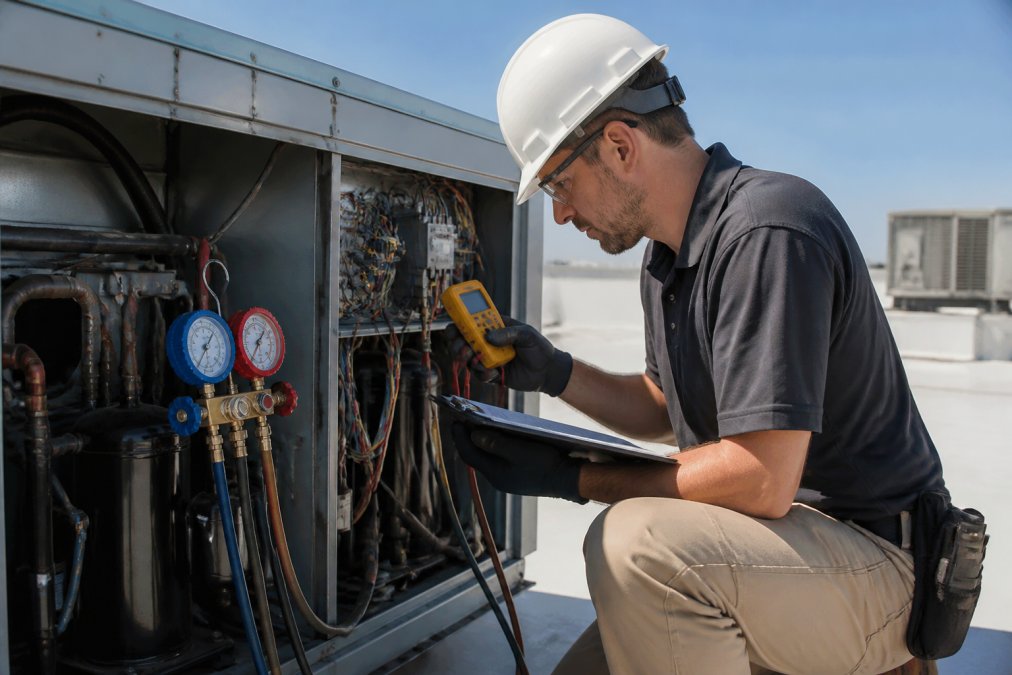
Seasonal Tune-Ups
Seasonal tune-ups happen before peak demand: spring before cooling season, fall before heating season. These comprehensive inspections go beyond monthly checks.
Pre-cooling season tune-ups include checking refrigerant levels, cleaning condenser coils, inspecting electrical connections, and testing capacitors. Refrigerant leaks reduce cooling capacity and force compressor overwork. Dirty condenser coils block heat transfer, reducing efficiency.
Pre-heating season maintenance involves checking ignition systems, inspecting heat exchangers for cracks or corrosion, testing safety controls, and cleaning burners. A cracked heat exchanger allows combustion gases into the building’s air supply, creating health risks. Dirty burners reduce efficiency and increase fuel consumption.
Both seasonal tune-ups should include a system audit: measuring airflow at supply and return vents, checking ductwork for leaks, and verifying thermostat settings match actual conditions across zones. Document findings and create a prioritized repair list before peak season.
How Often Should You Schedule Commercial HVAC Service Frequency
Service frequency depends on equipment age, building type, occupancy levels, and local climate. Most commercial systems need professional service at least twice annually (spring and fall), plus monthly or quarterly filter checks and inspections.
Newer systems (under 5 years) may need annual service if well-maintained with stable occupancy. Older systems (10+ years) often benefit from quarterly inspections to catch wear before it becomes critical. High-occupancy buildings or those with variable schedules should increase frequency to quarterly or monthly professional visits.
System type matters. Rooftop units in harsh weather need more frequent attention than indoor packaged systems. Multi-zone systems with VAV boxes require more complex diagnostics than single-zone systems. Buildings with significant outdoor air intake need more frequent filter changes and duct cleaning.
Your maintenance contract should specify service frequency clearly. Vague language like "as needed" leaves you vulnerable to neglect. A solid contract spells out exactly when technicians visit, what tasks they perform, and what’s included versus what costs extra.
Understanding Commercial HVAC Maintenance Contract Cost and Budgeting
Commercial HVAC maintenance contract costs vary based on system size, complexity, and service frequency. Budget using this formula: estimate 1-2% of your total facility budget for HVAC maintenance annually. For a building with a 1 million dollar annual operating budget, that’s 10,000 to 20,000 dollars per year.
Maintenance contracts typically fall into three categories. Basic contracts cover routine inspections, filter replacement, and minor adjustments. Mid-level contracts add coil cleaning, refrigerant top-offs, and priority emergency response. Comprehensive contracts include everything plus parts replacement for wear items like capacitors, bearings, and electrical components.
A basic contract might cost 3,000 to 5,000 dollars annually for a mid-size office building. A comprehensive contract might run 8,000 to 12,000 dollars. That difference looks large until you face an emergency repair costing 5,000 dollars for a part plus 2,000 dollars in labor outside business hours.
Smart budgeting means understanding what’s included and what’s not. Does the contract cover emergency calls? Are parts included or just labor? What’s the response time for non-emergency versus emergency service? A contractor quoting low but charging extra for everything beyond basic tasks may cost more long-term than one with higher upfront pricing but clearer scope.
Document your current system specifications, model numbers, age, capacity, and refrigerant type before requesting quotes. This allows contractors to give accurate estimates. Get at least three quotes and compare them on scope, not just price. The cheapest option often means the least thorough service.
Preventative Maintenance vs. Emergency Repairs: What Saves Money
Preventative maintenance costs less than emergency repairs. A system receiving regular tune-ups and filter changes might need a 500 dollar capacitor replacement every few years. That same neglected system will eventually need a 5,000 dollar compressor replacement or a complete system replacement costing 15,000 to 25,000 dollars.
Emergency repairs also disrupt operations. A cooling failure in July means uncomfortable employees, tenant complaints, and lost productivity. A heating failure in January can drive tenants to break leases. These indirect costs, lost rent, tenant turnover, reduced employee performance, often exceed repair costs.
Preventative maintenance creates predictability. You know approximately when service happens and what it costs. Emergency repairs catch you unprepared, often requiring premium pricing for after-hours or weekend service.
Building owners committing to preventative maintenance also negotiate better with contractors. A contractor knowing you’ll call every spring for a tune-up is more likely to give reasonable pricing for regular work. They’re incentivized to keep your system running well.
Preventative maintenance creates accountability. When a technician visits quarterly, they document system condition and flag potential problems. This paper trail protects you if something fails unexpectedly, showing you maintained the system properly for warranty disputes or insurance claims.
Smart Building Integration and Energy Efficiency
Modern commercial buildings increasingly integrate HVAC systems with building automation platforms using real-time data to optimize heating and cooling based on occupancy, weather, and time of day. The result is significant energy savings, often 15-25% reduction in HVAC energy consumption compared to traditional fixed-schedule systems.
Smart building integration starts with sensors. Temperature sensors throughout the building feed data to a central control system adjusting airflow and setpoints dynamically. Occupancy sensors ensure unoccupied spaces aren’t conditioned. CO2 sensors trigger demand-controlled ventilation, bringing in fresh air only when needed.
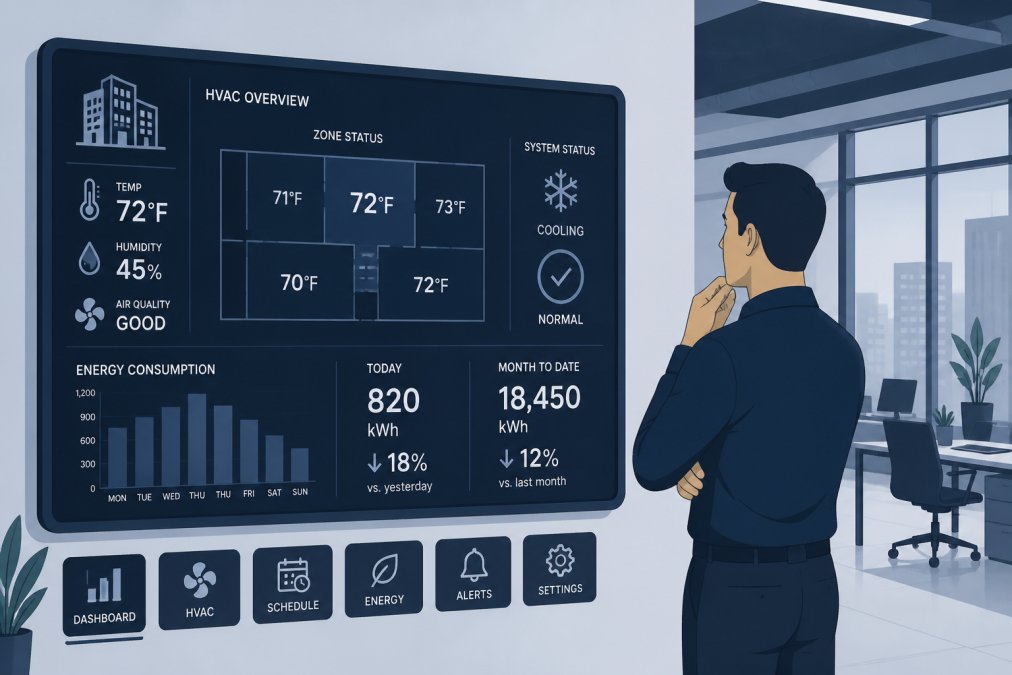
Thermostat calibration becomes critical in smart buildings. Sensors reading temperatures incorrectly cause poor system decisions. A sensor reading 2 degrees high triggers unnecessary cooling, wasting energy. Regular calibration ensures data accuracy and system efficiency.
Integration enables predictive maintenance. Building automation systems track equipment runtime, cycling frequency, and energy consumption patterns. Abnormal patterns signal developing problems before failures. A compressor running longer than usual might indicate refrigerant leaks or dirty condenser coils.
Energy efficiency improvements often qualify for utility rebates or tax incentives. Many utilities offer rebates for upgrading to high-efficiency equipment or installing smart controls. Check with your local utility about available programs, these rebates can offset 20-30% of upgrade costs.
Signs Your Office HVAC System Needs Professional Service
Some HVAC problems announce themselves loudly; others develop quietly until becoming emergencies. Knowing warning signs helps you call a technician before complete failure.
Uneven temperature distribution across your building is a red flag. If some rooms are comfortable while others are too hot or cold, the problem might be ductwork leaks, improper balancing, or failing components. Thermostats in different zones reading different temperatures despite similar setpoints suggest calibration or sensor problems.
Rising energy bills without corresponding occupancy increases suggest declining efficiency. Your system works harder to maintain the same comfort level, indicating something is wrong. Possible causes include refrigerant leaks, dirty coils, clogged filters, or failing compressors. A professional audit identifies the culprit.
Unusual noises, grinding, squealing, rattling, or hissing, indicate mechanical problems. Grinding means bearing wear. Squealing often signals belt or compressor issues. Hissing suggests refrigerant leaks. These noises worsen until component failure.
Visible damage to outdoor units, ductwork, or indoor components needs immediate attention. Bent fins on condenser coils reduce efficiency. Disconnected or leaking ducts waste conditioned air. Visible corrosion on electrical connections creates safety hazards.
Moisture or condensation around supply vents, return air grilles, or indoor units indicates drainage or refrigerant problems. Moisture in ductwork leads to mold growth, creating indoor air quality issues.
Reduced airflow from supply vents often means dirty filters, ductwork blockages, or failing fans. Check filters first, clogged filters are the most common cause. If filters are clean and airflow is still low, call a technician to check for ductwork leaks or fan problems.
Choosing a Certified Commercial HVAC Contractor
Not all HVAC contractors have the expertise or integrity to handle commercial systems properly. Your building deserves a contractor understanding commercial equipment, maintaining proper certifications, and charging fairly.
Start with credentials. Your contractor should hold EPA certification for handling refrigerants, this is a legal requirement. They should carry liability insurance and maintain proper licensing for your state. In Maryland, DC, and Northern Virginia, verify licensing with the relevant state board. Ask for documentation rather than accepting vague certification claims.
Experience with commercial systems matters. A contractor specializing in residential work might handle your system but lacks experience optimizing it for commercial efficiency or troubleshooting complex multi-zone systems. Ask how many commercial buildings they service, what equipment brands they work with most, and whether they have experience with your specific system type.
References are essential. Ask for at least three commercial clients you can contact. Find out how long they’ve worked with the contractor, what services they’ve received, and whether they’d recommend them. A contractor confident in their work provides references readily.
Transparency in pricing separates good contractors from those who oversell. A reputable contractor explains what’s included in a maintenance contract, what costs extra, and why. They provide written quotes before starting work and explain any changes during service. They won’t pressure you into unnecessary upgrades.
At Anthony & Son Indoor Air Quality, LLC, we prioritize honesty and transparency. Our certified technicians perform thorough inspections, document findings clearly, and explain exactly what work is needed and why. We don’t push unnecessary upgrades; we help you make informed decisions based on actual conditions and your budget.
Ask about emergency response. How quickly can they respond to emergency calls? Do they charge premium rates for after-hours service? A contractor offering reasonable emergency response at transparent rates is more valuable than one quoting low for regular service but charging exorbitant rates for emergencies.
Finally, trust your instincts about communication. A good contractor explains technical concepts in understandable language, answers questions patiently, and doesn’t rush you. If a contractor seems dismissive of your concerns or unwilling to explain their work, find someone else.
Maintaining a commercial HVAC system properly requires commitment, but the payoff is substantial. Regular maintenance prevents emergencies, reduces energy costs, extends equipment life, and keeps your building comfortable for tenants and employees. The right contractor, one combining technical expertise with honesty and transparency, makes all the difference. Contact Anthony & Son Indoor Air Quality, LLC today to schedule a comprehensive system audit and discuss a maintenance plan tailored to your building’s specific needs.
Frequently Asked Questions
What is included in a standard commercial HVAC maintenance contract?
A standard commercial HVAC maintenance contract typically includes routine inspections, filter replacements, lubrication of moving parts, refrigerant level checks, thermostat calibration, and system diagnostics. Many contracts also cover emergency repair discounts and priority service scheduling. The specific scope depends on your facility's needs and the contractor's service agreement terms. Contact Anthony & Son Indoor Air Quality, LLC to discuss what's included in a customized maintenance plan for your office.
How often should commercial HVAC units be serviced?
Most commercial HVAC systems require service twice annually: a cooling system tune-up in spring and a heating system tune-up in fall. High-use commercial buildings or systems operating year-round may benefit from quarterly inspections. Regular service frequency helps prevent equipment failure, maintains system efficiency, and extends the lifespan of your HVAC components. Your facility manager should establish a service schedule based on building size, occupancy levels, and local climate demands.
Why is preventative maintenance important for commercial office buildings?
Preventative maintenance reduces unexpected downtime, extends equipment lifespan, improves indoor air quality, and lowers energy consumption. Regular inspections catch minor issues before they become costly emergency repairs. For office buildings, maintaining reliable climate control directly affects employee comfort, productivity, and health. A well-maintained system also performs more efficiently, reducing utility bills and supporting sustainability goals. Preventative service plans are far more cost-effective than reactive repairs.
What are common signs that a commercial HVAC system needs service?
Watch for uneven heating or cooling across office spaces, unusual noises from equipment, rising energy bills, poor indoor air quality, or weak airflow from vents. Thermostat inconsistencies, visible leaks, or a system that cycles on and off frequently also indicate maintenance is needed. Temperature complaints from tenants or employees are another red flag. If you notice any of these signs, schedule a system audit with a certified technician to diagnose the problem and prevent further damage.
How does regular HVAC maintenance impact office energy costs?
Regular maintenance improves system efficiency by ensuring clean filters, proper refrigerant levels, and optimized airflow. A well-tuned system uses less energy to maintain target temperatures, directly reducing monthly utility bills. Studies show that preventative maintenance can lower energy consumption by 5-15% compared to neglected systems. Over a year, those savings add up significantly, especially in larger commercial buildings. Routine service also supports smart building automation and demand-controlled ventilation, further optimizing energy use.
This article was written using GrandRanker