
Table of Contents
- What Is an HVAC Maintenance Plan and Why It Matters
- Quick Comparison: Top HVAC Maintenance Plans
- What’s Included in a Standard HVAC Maintenance Agreement
- How to Reduce High Energy Bills With Preventative Maintenance
- HVAC Tune-Up Checklist: What Technicians Should Inspect
- Cost of HVAC Maintenance Plans and ROI
- DIY Maintenance vs. Professional Service Plans
- How to Choose the Right Plan for Your Home or Business
Last Updated: August 20, 2026
What Is an HVAC Maintenance Plan and Why It Matters
An HVAC maintenance plan is a service agreement that includes regular preventative maintenance, system inspections, and often discounts on repairs. These plans typically cover two annual tune-ups, one for your heating system in fall and one for your air conditioning in spring, ensuring your equipment runs efficiently year-round.
Preventative maintenance catches small problems before they become expensive emergencies. A refrigerant leak detected during a spring tune-up costs far less to repair than an air conditioning failure in July. Regular maintenance extends your system’s lifespan, improves energy efficiency, and maintains indoor air quality. At Anthony & Son Indoor Air Quality, LLC, we’ve seen how preventative care transforms HVAC performance. Customers who commit to annual tune-ups report fewer unexpected breakdowns, lower energy bills, and greater peace of mind.
Quick Comparison: Top HVAC Maintenance Plans
| Plan | Best For | Key Features | Annual Tune-Ups | Priority Service |
|---|---|---|---|---|
| Anthony & Son Indoor Air Quality, LLC Maintenance Plans | Local reliability with indoor air quality focus | Seasonal tune-ups, priority scheduling, repair discounts, indoor air quality checks | 2 per year | Yes |
| United Air Temp 1931 Comfort Club | Budget-conscious homeowners wanting bundled services | HVAC tune-ups, annual plumbing inspection, repair discounts, no overtime charges | 2 per year | Yes |
| Belair Engineering Energy Savings Plan (ESP) | Prince George’s County residents seeking refrigerant coverage | Bi-annual tune-ups, 10% parts/labor discount, refrigerant included, detailed system cleaning | 2 per year | Yes |
| CroppMetcalfe Maintenance+ Membership | Homeowners planning future system replacement | Two maintenance visits, 24-hour priority response, repair discounts, $500 replacement credit | 2 per year | Yes, 24-hour guaranteed |
| Service Today HVAC Precision Check-Up Plan | Homeowners preferring flexible payment options | Two annual visits, priority service, 15% repair savings, monthly payment option | 2 per year | Yes |
| BGE Smart Energy Savers Program HVAC Tune-up | BGE electric customers seeking no-cost baseline maintenance | Free tune-up for eligible customers, smart thermostat eligibility, system diagnostics | 1 per year | No |
What’s Included in a Standard HVAC Maintenance Agreement
A standard maintenance visit covers critical components that determine whether your system operates efficiently. During a typical tune-up, technicians inspect thermostat calibration, clean condenser coils, check refrigerant levels, inspect the blower motor and heat exchanger, test electrical connections and safety controls, and replace or clean air filters.
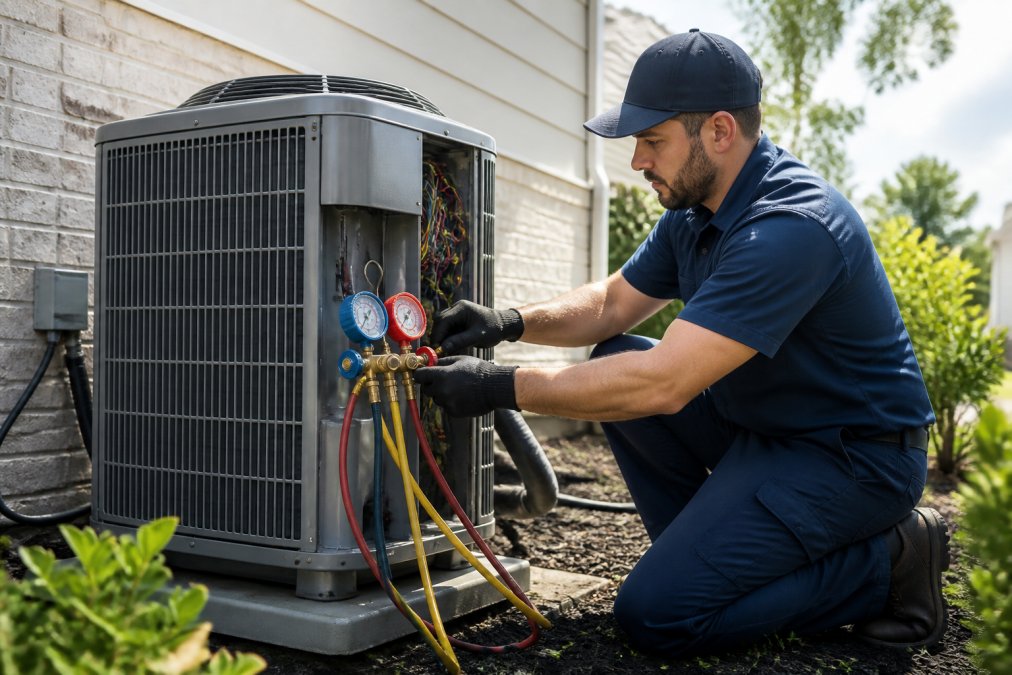
What separates thorough maintenance from quick inspection is attention to detail. Premium plans include detailed cleaning of internal components, comprehensive system diagnostics, and documentation of your equipment’s condition over time. This historical record becomes invaluable when deciding whether to repair or replace an aging system.
Request a written summary after each maintenance visit. A good HVAC contractor provides a report listing what was inspected, any minor issues found, and recommendations for future work. This documentation protects you by creating a clear record of your system’s maintenance history.
Most service agreements specify what’s covered and what costs extra. Refrigerant top-offs, for example, are included in some plans but charged separately in others. Belair Engineering’s Energy Savings Plan includes up to one pound of R410 refrigerant annually, which saves money compared to plans that charge per pound. Check cancellation policies as well, some require 30-day notice while others lock you in for the full contract year.
How to Reduce High Energy Bills With Preventative Maintenance
Energy efficiency directly connects to maintenance quality. A system running with dirty coils, low refrigerant, or a clogged filter works harder to reach your desired temperature, consuming more electricity. According to the U.S. Department of Energy’s guidance on HVAC efficiency, regular maintenance can improve system efficiency by up to 15%, translating to measurable savings on monthly utility bills.
Clean condenser coils transfer heat more effectively, reducing runtime needed to cool your home. Proper refrigerant levels allow the system to operate at design capacity. A well-calibrated thermostat prevents overshooting your setpoint temperature, which wastes energy. Seasonal tune-ups before peak demand seasons keep your system running efficiently rather than waiting until something breaks.
The single biggest energy waste in HVAC systems comes from neglected maintenance. A system that hasn’t been serviced in three years operates at 15-25% lower efficiency than one receiving annual tune-ups. Over a decade, that difference compounds into thousands of dollars in wasted energy costs.
A clean filter maintains proper airflow, essential for both comfort and energy performance. Some plans include air quality assessments that identify whether your current filter type matches your system’s needs.
HVAC Tune-Up Checklist: What Technicians Should Inspect
A comprehensive maintenance visit follows a structured inspection process:
Heating System Inspection (Fall)
- Test furnace ignition and burner operation
- Inspect heat exchanger for cracks or corrosion
- Check thermostat calibration and battery backup
- Clean or replace furnace filter
- Inspect blower motor and lubricate bearings
- Test safety controls and limit switches
Air Conditioning System Inspection (Spring)
- Inspect outdoor condenser unit for debris
- Clean condenser coils and fins
- Check refrigerant charge with gauges
- Inspect indoor evaporator coil for mold or blockage
- Test capacitors and electrical connections
- Verify proper thermostat operation in cooling mode
Year-Round Considerations
- Evaluate filter condition and recommend replacement schedule
- Check ductwork for air leaks affecting efficiency
- Assess indoor air quality and recommend filtration upgrades if needed
- Document equipment age and remaining useful life
- Identify any unusual noises or performance issues
If a technician completes a tune-up in under 30 minutes, they’re likely skipping critical inspections. A thorough maintenance visit requires time for coil cleaning, component testing, and documentation. Fast inspections often miss developing problems that become expensive failures.
The checklist represents industry best practices, though specific HVAC systems may require additional steps. Heat pump systems require testing both heating and cooling modes. Ductless mini-split systems need different inspection procedures than traditional central air systems.
Cost of HVAC Maintenance Plans and ROI
HVAC maintenance plan pricing varies based on location, equipment type, and plan comprehensiveness. Most plans range from modest annual costs to several hundred dollars. A single emergency HVAC repair during peak season often costs more than an entire year of preventative maintenance. An air conditioning failure in July typically requires an expensive emergency service call, often with overtime charges.
Maintenance plans provide measurable value through repair discounts. Plans offering 10-15% discounts on parts and labor mean that when minor repairs occur, you’re paying less. CroppMetcalfe’s Maintenance+ Membership includes a $500 credit toward a replacement system, valuable if your equipment reaches end-of-life within the plan period.
The energy efficiency benefit quantifies directly. A system operating at 15% lower efficiency due to poor maintenance consumes that much more energy throughout the year. For a typical household spending $1,200 annually on heating and cooling, a 15% efficiency loss represents $180 in wasted energy costs. Over five years, that’s $900, often exceeding the total cost of multiple maintenance plans.
:::bestfor
Homeowners with equipment older than 10 years benefit most from maintenance plans. Aging systems are more likely to develop problems, making preventative care increasingly valuable. If your furnace or air conditioner is approaching the end of its expected lifespan, a plan offering replacement credits provides additional incentive.
::: improving air quality.
The ROI becomes even stronger for commercial property managers. A single HVAC failure in a multi-tenant building creates liability issues, tenant complaints, and potential lease violations. The cost of emergency repairs plus lost tenant goodwill often far exceeds annual maintenance plan costs.
DIY Maintenance vs. Professional Service Plans
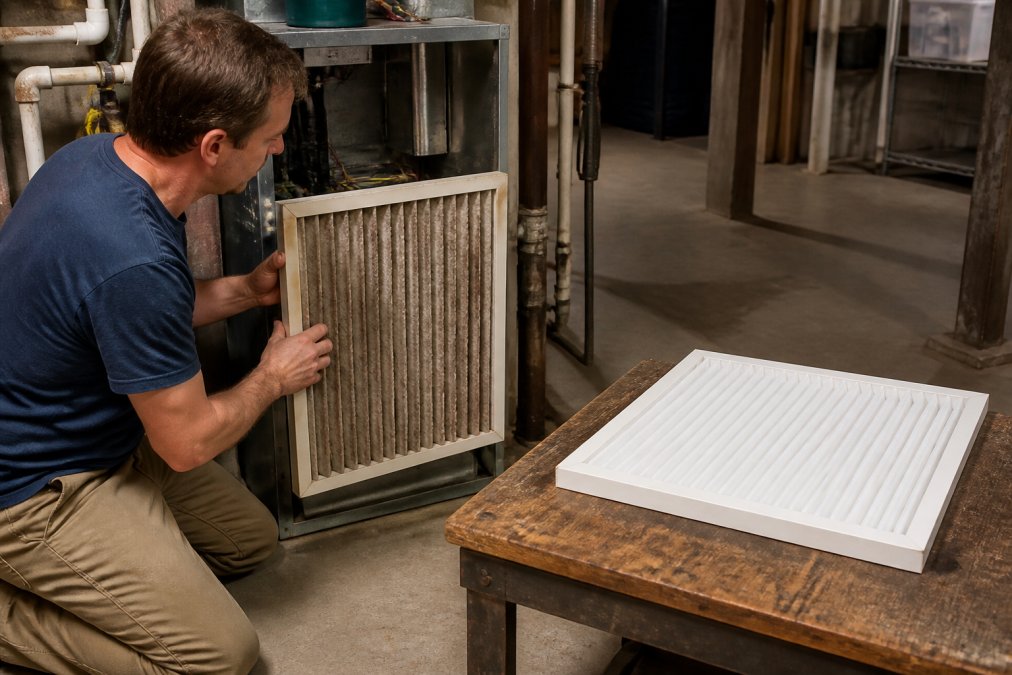
Some HVAC maintenance tasks are within reach for homeowners with basic mechanical aptitude. Others require specialized tools, refrigerant certifications, and expertise that separate professionals from amateurs.
Safe DIY Tasks
- Replacing air filters according to manufacturer recommendations
- Visually inspecting outdoor condenser units for obvious debris
- Keeping the area around outdoor units clear of vegetation
- Checking thermostat batteries and replacing them
- Cleaning accessible ductwork registers and vents
These tasks require no special tools and carry minimal risk. However, they don’t replace professional tune-ups, they complement them.
Tasks Requiring Professional Expertise
- Refrigerant handling (federal law requires EPA certification)
- Opening sealed system components
- Electrical testing and repairs
- Coil cleaning requiring system access
- Thermostat calibration and programming
- Heat exchanger inspection for cracks
Refrigerant work deserves special emphasis. The EPA’s Section 608 certification requirement exists because improper refrigerant handling damages the ozone layer and violates federal law. Only EPA-certified technicians can legally purchase, handle, or dispose of refrigerant.
DIY maintenance handles maybe 10-15% of what a professional tune-up covers. A homeowner replacing their own filter is doing useful work, but they’re not checking refrigerant charge, inspecting the heat exchanger, testing electrical connections, or cleaning internal coils. This is why professional service plans remain essential.
How to Choose the Right Plan for Your Home or Business
Selecting the best HVAC maintenance plan requires matching your specific situation against what each plan offers. Start by identifying your equipment type. Older systems benefit from more frequent monitoring, while newer equipment under manufacturer warranty may have different coverage needs.
Next, evaluate your risk tolerance. If unexpected HVAC failures would create serious disruption, priority scheduling and emergency response guarantees become valuable. CroppMetcalfe’s guarantee of 24-hour response time appeals to customers who can’t afford downtime. BGE’s free tune-up appeals to budget-conscious customers willing to sacrifice priority service.
Consider your location and equipment complexity. If you have a heat pump system, ensure the plan covers both heating and cooling modes. If you have a ductless mini-split system, verify the contractor has experience with that specific equipment. Anthony & Son Indoor Air Quality, LLC’s focus on indoor air quality matters if air quality concerns affect your household or business environment.
Review the repair discount structure. A 10-15% discount on parts and labor applies to virtually any repair. Plans that include specific items like refrigerant or capacitors provide extra value. Compare not just the plan cost but what you’re actually getting for that investment.
Don’t overlook contractual details. Cancellation policies, payment options (annual vs. monthly), and what happens if you move all matter. Some plans lock you in for a full year with penalties for early termination. Others offer month-to-month flexibility.
Finally, trust matters. The best plan means nothing if the contractor cuts corners or upsells unnecessary work. Ask for references, verify certifications, and pay attention to how the company responds to your questions. A trustworthy contractor explains what they found during maintenance and why any recommended repairs matter.
Choosing an HVAC maintenance plan protects your comfort investment and controls costs. Regular preventative maintenance catches problems early, extends your equipment’s lifespan, and keeps energy bills reasonable. For homeowners and businesses in our region, Anthony & Son Indoor Air Quality, LLC offers comprehensive maintenance plans that combine local expertise with genuine commitment to indoor air quality and system efficiency. Contact us today for a personalized maintenance plan that matches your home’s or business’s specific needs.
Frequently Asked Questions
Is it worth it to get an HVAC maintenance plan?
Yes, for most homeowners. An HVAC maintenance plan provides preventative care that extends equipment lifespan, improves energy efficiency, and reduces the risk of costly emergency repairs. Plans typically include two annual tune-ups, priority scheduling, and repair discounts. The investment pays for itself when it prevents a $1,500+ emergency repair or reduces energy bills by 10-15% annually. Plans are especially valuable for older systems or homes in climates with heavy heating and cooling seasons.
What should be included in a standard HVAC maintenance agreement?
A comprehensive HVAC maintenance agreement should include two annual tune-ups (one for heating, one for cooling), filter replacement, refrigerant level checks, condenser coil cleaning, thermostat calibration, blower motor inspection, and heat exchanger evaluation. Most plans also offer priority scheduling for repairs, discounted labor rates, and a reduced diagnostic fee. Some plans include parts discounts ranging from 10-15%. Always verify what's covered before signing, and check if emergency repairs are included or discounted.
How much can I save on energy bills with regular HVAC maintenance?
Regular HVAC maintenance can reduce energy bills by 5-15% annually, depending on your system's age and condition. Tune-ups improve system performance by cleaning coils, checking refrigerant levels, and calibrating thermostats. A well-maintained system runs more efficiently, requiring less energy to heat or cool your home. Older systems see larger savings from maintenance. Combined with a programmable thermostat and sealing air leaks, maintenance becomes part of a broader strategy to lower utility costs.
Do HVAC maintenance plans cover emergency repairs?
Most HVAC maintenance plans do not cover the full cost of emergency repairs, but they offer significant benefits. Plan members typically receive priority scheduling (often within 24 hours), discounted labor rates (10-15%), reduced diagnostic fees, and sometimes a waived service call charge. Some plans include a no-breakdown guarantee or emergency service perks. Always review the fine print to understand what's covered versus discounted. This is why plans are most valuable when combined with a financial buffer for unexpected major repairs.
How often should I schedule professional HVAC maintenance?
Industry standards recommend two professional tune-ups per year: one before the heating season and one before the cooling season. This schedule ensures your system runs efficiently during peak demand periods and catches problems early. Some older systems or those in harsh climates may benefit from more frequent inspections. Between professional visits, homeowners should check and replace air filters monthly during heavy use seasons to maintain system performance and air quality.
This article was written using GrandRanker