
Table of Contents
- Why Your HVAC Bills Are So High
- Inefficient or Aging HVAC Systems
- Signs of HVAC Inefficiency You Shouldn’t Ignore
- Poor Insulation and Air Leaks
- Dirty or Clogged Air Filters and Ductwork Issues
- HVAC Maintenance Checklist to Reduce Energy Waste
- How to Reduce High Energy Bills
- Conclusion
Last Updated: August 17, 2026
Why Your HVAC Bills Are So High
If your heating and cooling costs have skyrocketed, you’re not alone. Many homeowners face unexpectedly high HVAC energy bills without understanding what’s driving the expense. The culprit isn’t always a broken system, sometimes it’s a combination of factors working against your efficiency. At Anthony & Son Indoor Air Quality, LLC, we’ve helped homeowners identify why their HVAC bills climb and what they can actually do about it.
The reasons for high HVAC energy bills range from aging equipment and poor insulation to simple maintenance oversights. Some issues are quick fixes. Others require professional attention. What matters is knowing where to look. This guide walks you through the seven most common causes and gives you actionable steps to lower your costs without sacrificing comfort.
Inefficient or Aging HVAC Systems
An old air conditioning or heating system is one of the biggest culprits behind high HVAC energy bills. Systems lose efficiency over time. A unit that was 95% efficient when new may drop to 70% or lower after 15 years of operation.
The age of your system matters more than most homeowners realize. Older compressors work harder to move refrigerant through the system. Motors become less efficient. Coils accumulate buildup that restricts airflow. Each of these problems forces your system to run longer to reach the same temperature.
Systems installed before 2010 are particularly inefficient by today’s standards. Modern equipment uses advanced compressor designs and refrigerants that perform better at lower energy consumption. If your system is approaching 15 years old or has already passed that mark, efficiency loss is almost certainly costing you money every month.
Request a professional energy audit before deciding on replacement. A certified technician can measure your system’s actual efficiency using diagnostic tools and compare it against modern equipment. This comparison shows your real savings potential, not estimates, but actual projected costs.
Replacement costs vary based on your home’s size and the type of system you choose. However, newer systems often pay for themselves through energy savings within 5-8 years. Anthony & Son Indoor Air Quality, LLC can assess whether repair or replacement makes financial sense for your specific situation.
Signs of HVAC Inefficiency You Shouldn’t Ignore
Recognizing inefficiency early prevents wasted energy and money. Several warning signs indicate your system is working harder than it should.
Uneven temperatures throughout your home suggest airflow problems or a system that’s struggling to meet demand. One room stays cold while another stays warm. This forces your thermostat to run longer cycles trying to balance temperatures. The system cycles on and off more frequently, consuming more energy overall.
Higher-than-normal utility bills without a change in usage patterns point directly to system inefficiency. If your home’s square footage, occupancy, or thermostat settings haven’t changed but your bills increased, your HVAC system is likely the cause.
Unusual noises from your outdoor unit, grinding, rattling, or squealing, indicate mechanical wear. These sounds mean internal components are failing and the system must work harder to function. Ignoring these sounds leads to complete failure and emergency repair costs.
A system that runs constantly without reaching your target temperature has lost capacity. This happens when refrigerant leaks, compressor efficiency drops, or airflow becomes severely restricted. Your system runs nonstop in an attempt to satisfy the thermostat, consuming maximum energy.
Ignoring these signs costs you hundreds of dollars in wasted energy each month. A system that runs 40% longer than necessary can add $50-$100+ to monthly bills depending on your climate and utility rates.
Poor Insulation and Air Leaks
Your HVAC system’s job becomes exponentially harder when your home loses conditioned air to the outdoors. Poor insulation and air leaks force the system to work longer and cycle more frequently to maintain temperature.
Air leaks occur around windows, doors, electrical outlets, and where utilities enter your home. Gaps in weatherstripping, cracks in caulking, and gaps around pipes all allow conditioned air to escape. Your system must continuously replace this lost air, running longer cycles than necessary.
Insulation degradation happens gradually. Over decades, insulation settles, compacts, or deteriorates. Attic insulation that was adequate in 1990 may provide only half its original R-value today. Walls lose effectiveness as insulation shifts. Basement rim joists often have minimal or no insulation at all.
The impact compounds in extreme seasons. During summer, every degree of outside heat that penetrates through poor insulation forces your air conditioning to work harder. During winter, every BTU of heat that escapes through walls and attic makes your furnace run longer. The cumulative effect across an entire season shows up dramatically in your utility bills.
EPA guidance on home weatherization and insulation improvements identifies air sealing and insulation upgrades as among the most cost-effective ways to reduce HVAC energy consumption.
Sealing air leaks and upgrading insulation can reduce your HVAC runtime by 15-25%, directly lowering your energy bills proportionally.
Dirty or Clogged Air Filters and Ductwork Issues
Two often-overlooked maintenance items create massive efficiency problems: dirty air filters and leaky ductwork. Both restrict airflow, forcing your system to work harder.
Dirty Air Filters
A clogged air filter restricts airflow into your HVAC system. Your blower motor must work harder to push air through the filter. The system runs longer to circulate the same volume of air throughout your home. This increased runtime directly increases energy consumption.
Most homeowners should replace air filters every 1-3 months depending on home conditions. Homes with pets, allergies, or construction dust need more frequent changes. A filter that looks slightly dirty already restricts airflow measurably.
The efficiency loss from a dirty filter is immediate and quantifiable. A filter clogged with dust and debris can reduce airflow by 25-40%, forcing your system to run 30-50% longer to achieve the same air circulation. Over a month, this adds up to significant wasted energy.
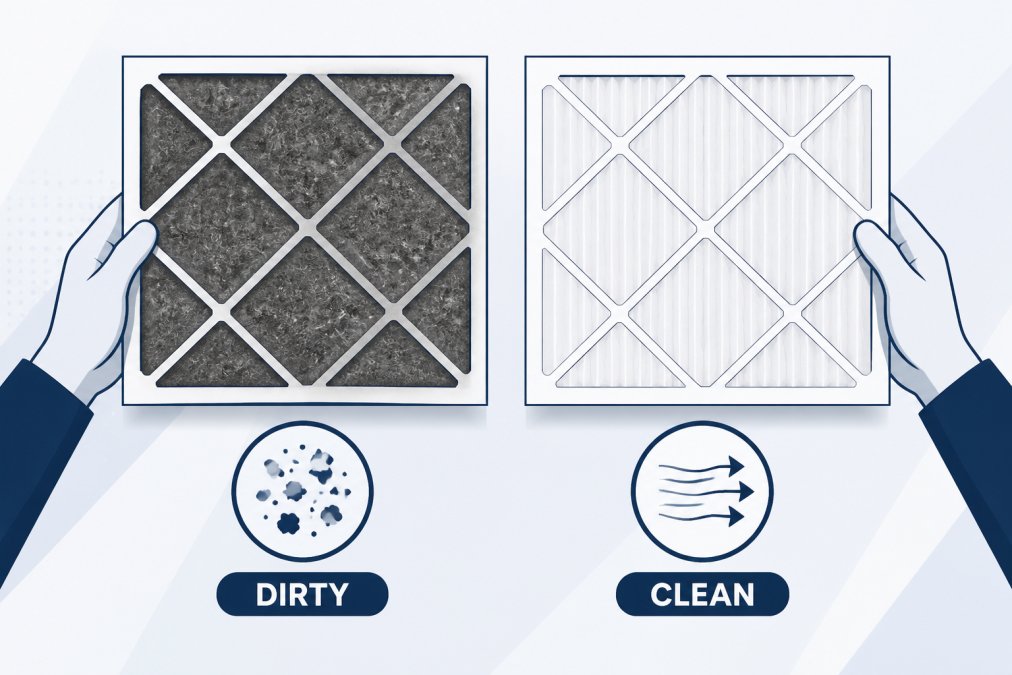
Establishing a filter replacement schedule prevents this problem entirely. Many homeowners use subscription services to receive replacement filters automatically, ensuring consistent maintenance without the hassle of remembering purchase dates.
Leaky Ductwork
Ductwork distributes conditioned air throughout your home. Leaks in ducts allow air to escape into unconditioned spaces like attics, crawlspaces, or walls. Your system must produce more air to compensate for these losses.
Duct leaks develop from vibration over time, poor installation, or deteriorating sealant. Connections between duct sections separate slightly. Flexible ducts develop pinhole leaks. Metal ducts develop corrosion holes. Each leak reduces the amount of conditioned air reaching your living spaces.
Research shows that typical homes lose 20-30% of conditioned air through ductwork leaks. Some homes with severe leakage lose 40% or more. This means your system must run 25-40% longer to deliver the same comfort level, directly multiplying your energy costs.
Professional duct sealing using aeroseal technology seals leaks from inside the ductwork using a polymer aerosol. This approach can reduce duct leakage by up to 90%, dramatically improving system efficiency.
HVAC Maintenance Checklist to Reduce Energy Waste
Preventative maintenance keeps your system running at peak efficiency. A systematic approach catches small problems before they become expensive ones.
| Maintenance Task | Frequency | Impact |
|---|---|---|
| Replace air filter | Every 1-3 months | Improves airflow, reduces runtime |
| Clean condenser coils | Annually (spring) | Improves heat transfer, reduces energy use |
| Check refrigerant charge | Annually | Ensures proper cooling capacity |
| Inspect ductwork for leaks | Annually | Prevents conditioned air loss |
| Calibrate thermostat | Annually | Ensures accurate temperature control |
| Clean evaporator coil | Every 2-3 years | Maintains heat transfer efficiency |
| Inspect electrical connections | Annually | Prevents component failure |
| Lubricate moving parts | Annually | Reduces friction and wear |
Spring tune-ups before cooling season and fall tune-ups before heating season catch seasonal problems. A technician checks refrigerant levels, inspects coils for debris, tests electrical components, and verifies thermostat accuracy. These annual inspections typically cost significantly less than emergency repairs and prevent efficiency loss throughout the season.
Schedule maintenance appointments in April (before summer cooling) and October (before winter heating). Technicians are less busy during these shoulder seasons, and you’ll catch problems before peak demand periods when emergency repairs [become necessary](/book-emergency-hvac-repair-dc/).
How to Reduce High Energy Bills
Understanding the problems is only half the battle. Taking action to fix them directly reduces your monthly costs.
Thermostat Settings and Calibration
Your thermostat controls when your system runs. Incorrect settings or a miscalibrated thermostat can cause unnecessary runtime and wasted energy.
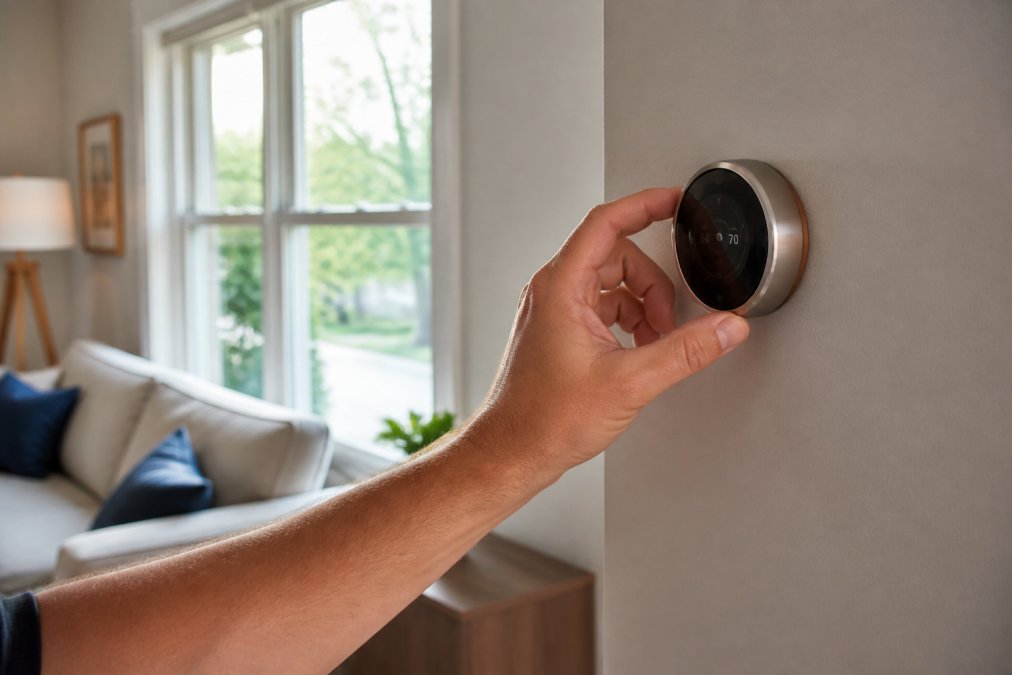
Most homeowners set their thermostat too aggressively. Lowering heating by just 2-3 degrees during winter or raising cooling by 2-3 degrees during summer reduces runtime meaningfully. A 3-degree adjustment typically reduces energy consumption by 5-10% depending on outdoor temperatures and home insulation.
Thermostat calibration ensures the device accurately reads room temperature. A thermostat that reads 2 degrees higher than actual temperature will trigger heating too early or cooling too late, causing unnecessary cycles. Professional calibration verifies accuracy and corrects drift.
Programmable thermostats allow you to adjust temperature automatically based on time of day and day of week. Lowering temperature when no one is home or when everyone is asleep reduces runtime during unoccupied periods.
Smart Thermostat Installation
Smart thermostats learn your patterns and adjust automatically. The Honeywell Home T9 Smart Thermostat uses remote room sensors to ensure uniform heating and cooling throughout your home, preventing the system from running excessively to satisfy temperature sensors in poorly insulated rooms.
Smart thermostats provide geofencing capabilities that adjust temperature when you leave home and restore comfort settings before you return. This automation eliminates the need to remember manual adjustments while ensuring your system doesn’t run unnecessarily when the home is empty.
Remote monitoring via smartphone apps lets you adjust temperature from anywhere. If you forget to adjust the thermostat before leaving for vacation, you can lower the setting remotely instead of heating or cooling an empty home for a week.
Duct Sealing and Insulation Upgrades
Sealing leaky ductwork prevents conditioned air loss. Professional duct sealing using aeroseal technology seals leaks from inside the ducts, achieving results that traditional tape and sealant cannot match. This single upgrade often reduces energy bills by 15-25%.
Insulation upgrades in attics, basements, and crawlspaces reduce heat transfer through your home’s thermal envelope. Adding insulation to an under-insulated attic, sealing rim joists in basements, and weatherstripping around doors and windows all reduce the load on your HVAC system.
The Department of Energy’s weatherization resources provide detailed guidance on identifying where your home loses energy and prioritizing upgrades based on cost and impact.
Refrigerant Leaks and System Capacity
Refrigerant leaks reduce your system’s cooling capacity. The compressor works harder trying to achieve cooling with insufficient refrigerant, consuming more energy while delivering less comfort.
Signs of refrigerant leaks include reduced cooling performance, ice buildup on outdoor unit coils, or hissing sounds from the system. Refrigerant leaks require professional service, this is not a DIY fix. A certified technician locates the leak, repairs it, and recharges the system to proper capacity.
System capacity mismatch occurs when an HVAC unit is oversized or undersized for your home. An oversized system cycles on and off too frequently, consuming energy without running long enough for efficient operation. An undersized system runs continuously trying to meet demand, consuming maximum energy without achieving comfort.
Proper system sizing considers your home’s square footage, insulation quality, window area, climate zone, and occupancy patterns. Anthony & Son Indoor Air Quality, LLC can evaluate whether your current system matches your home’s actual needs and recommend right-sizing if necessary.
High HVAC energy bills don’t have to be permanent. The causes are identifiable and fixable. Start with the easiest wins: replace your air filter, adjust thermostat settings, and seal obvious air leaks around windows and doors. These steps cost little but reduce energy waste immediately. For more complex issues like ductwork leaks, refrigerant problems, or system efficiency loss, professional diagnosis and repair become necessary. Contact Anthony & Son Indoor Air Quality, LLC today for a comprehensive HVAC assessment. Our certified technicians will identify exactly what’s driving your high bills and recommend the most cost-effective solutions. With proper maintenance and targeted upgrades, you can reduce your HVAC energy consumption significantly and reclaim comfort without the shock of inflated utility bills.
Frequently Asked Questions
Why is my HVAC using so much electricity?
Your HVAC system consumes the most electricity when it runs inefficiently due to dirty filters, leaky ductwork, poor insulation, or an aging unit. A refrigerant leak forces your compressor to work harder, increasing energy consumption. Improper thermostat settings and uneven airflow also drive up kilowatt-hour usage. A professional HVAC maintenance check can identify the specific cause and help reduce energy consumption significantly.
What are the most common signs of an inefficient HVAC system?
Signs of HVAC inefficiency include uneven room temperatures, higher-than-normal utility bills, weak airflow from vents, unusual noises from the compressor, and difficulty maintaining set temperatures. Older systems (15+ years) naturally lose efficiency. If your home feels drafty despite the system running, or if certain rooms stay too hot or cold, your system may have airflow problems, duct leaks, or a failing compressor. Schedule a professional inspection to diagnose the issue.
How often should I change my air filters to save on energy?
Replace your HVAC air filter every 1 to 3 months, depending on your system, pets, and home conditions. A dirty filter restricts airflow, forcing your HVAC system to work harder and consume more energy. Homes with pets or allergies may need monthly changes. A clean filter improves system performance and can reduce energy costs. Consider a filter subscription service for automatic reminders and convenient delivery.
Can a refrigerant leak cause high energy bills?
Yes. A refrigerant leak reduces your air conditioning system's ability to cool effectively, forcing the compressor to run longer and harder to reach your set temperature. This significantly increases energy consumption and your utility bill. Refrigerant leaks also damage the compressor over time. If you suspect a leak (low cooling output, hissing sounds), contact a certified HVAC technician immediately for diagnosis and repair.
This article was written using GrandRanker