
Table of Contents
- 1. Rising Energy Bills Without Explanation
- 2. Strange Noises: Banging, Squealing, or Rattling
- 3. Uneven Heating Throughout Your Home
- 4. Furnace Not Blowing Hot Air
- 5. Yellow Pilot Light vs. Blue Flame
- 6. Frequent Repairs and Maintenance Calls
- 7. Your Furnace Is 15+ Years Old
- Signs You Need Furnace Repair: When to Act
Last Updated: August 16, 2026
1. Rising Energy Bills Without Explanation
When your furnace works harder than it should, utility bills climb. Unexpected spikes in heating costs without changes in usage or weather suggest your furnace is losing efficiency. A system operating at reduced capacity runs longer to reach your desired temperature, consuming more energy.
A clogged air filter restricts airflow, forcing the blower motor to work overtime. The heat exchanger may develop cracks or corrosion, reducing heat transfer. A malfunctioning thermostat causes unpredictable cycling. Ductwork leaks waste heated air before it reaches living spaces.
Start by checking your air filter, dirty filters are the most common culprit behind rising energy costs. If bills remain high with a clean filter, schedule a professional inspection. At Anthony & Son Indoor Air Quality, LLC, our certified HVAC technicians use industry-leading diagnostic equipment to identify efficiency losses and recommend targeted repairs.
Regular maintenance prevents this entirely. Seasonal tune-ups catch minor problems before they become energy-draining failures. A professional can clean components, check performance, and optimize settings to ensure your furnace operates at rated efficiency.
Track your [energy bills](/how-to-reduce-high-energy-bills-8-proven-steps/) month-to-month during heating season. A sudden 15-20% increase is a red flag. Compare current bills to the same months last year, unexplained jumps suggest a problem.
2. Strange Noises: Banging, Squealing, or Rattling
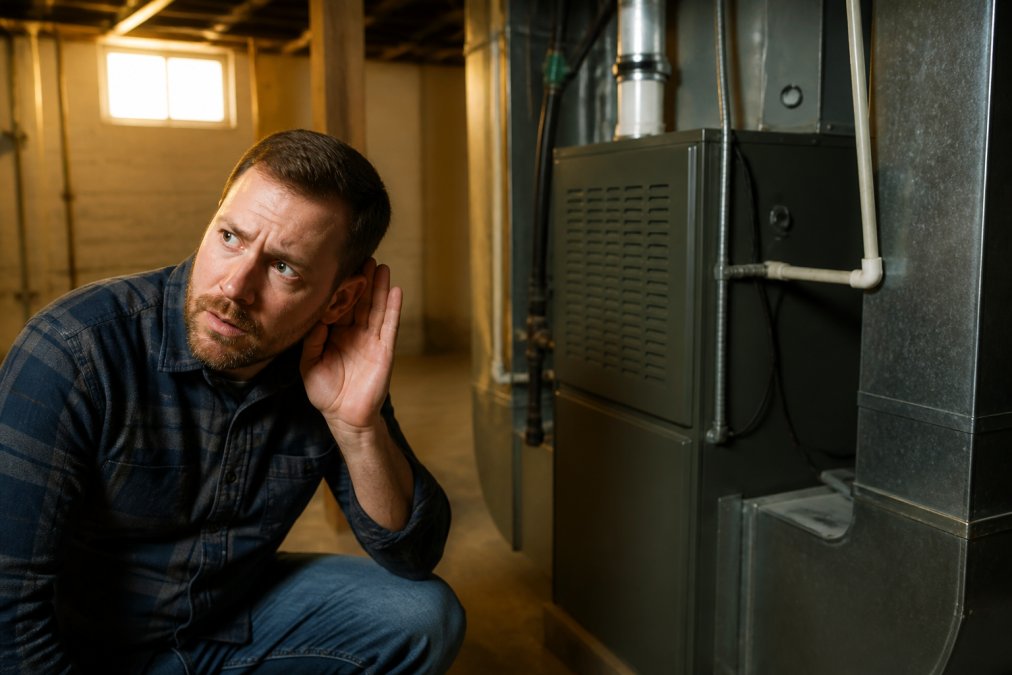
Your furnace should operate quietly. Strange noises signal failing or loose internal components. Different sounds point to different problems.
Banging or clunking sounds often come from metal ductwork expanding and contracting. However, loud banging inside the furnace suggests a cracked heat exchanger, failing blower motor, or debris loose inside the unit. Ignoring this leads to system failure.
Squealing or high-pitched sounds typically indicate a worn blower motor bearing or slipping belt. When the blower motor fails, the noise worsens until the motor stops working entirely, leaving you without heat.
Rattling sounds usually mean loose panels, fasteners, or internal components vibrating against the housing. While sometimes minor, rattling indicates parts coming loose, a problem that worsens with each heating cycle.
Humming without heat suggests the furnace is trying to ignite but failing. This points to ignitor failure, a dirty flame sensor, or a problem with the gas valve. The system cycles repeatedly without producing heat, wasting energy and preventing your home from warming.
Don’t wait for strange noises to resolve themselves. Schedule a professional inspection immediately. A technician can pinpoint the exact source, assess severity, and recommend whether repair or replacement makes sense.
3. Uneven Heating Throughout Your Home
Some rooms stay warm while others feel cold. This frustrating problem affects comfort and energy efficiency. Uneven heating means your furnace is working, but heat isn’t reaching all areas equally.
The most common cause is ductwork problems. Leaks allow heated air to escape into attics, crawlspaces, or walls before reaching living areas. Crushed or kinked ducts restrict airflow to certain rooms. Poorly designed ductwork creates pressure imbalances.
A second major cause is thermostat placement. If your thermostat sits in a naturally warm or cold spot, it may shut off the furnace before the entire home reaches your target temperature. A thermostat in a sunny room reads higher than actual home temperature, causing premature shutdown.
Damper problems in your ductwork also create uneven heating. Manual dampers that control airflow to different zones can become stuck or misaligned. Incorrect positioning restricts airflow to some rooms while others get too much.
A severely clogged air filter reduces overall airflow, affecting heating distribution. Rooms farthest from the furnace suffer most when airflow is compromised.
Professional HVAC technicians use thermal imaging and pressure testing to identify the exact cause. They can seal ductwork leaks, reposition dampers, and optimize your system so every room reaches your target temperature.
Never close vents in unused rooms to “save energy.” Closed vents create pressure imbalances that damage your furnace and worsen uneven heating. Keep all vents open to maintain proper airflow and system health.
4. Furnace Not Blowing Hot Air
Your furnace runs and you hear the blower motor, but no heat comes from your vents. The furnace may be cycling on, but the air flowing through your home is cold or barely warm.
The most common cause is a faulty ignitor or pilot light failure. The furnace attempts to ignite the gas burner but fails, so the system shuts down without producing heat. You’ll hear the furnace try to start, then hear a clicking sound as the ignitor attempts to light the burner repeatedly.
A dirty flame sensor causes similar problems. The flame sensor detects whether the burner ignited successfully. If soot or debris coats the sensor, it can’t detect the flame even when the burner is working, causing the furnace to shut down as a safety measure.
A clogged air filter can indirectly cause this issue. Severe restriction forces the furnace to shut down due to high internal pressure, a safety feature that prevents overheating. Replacing the filter often restores normal operation.
If your furnace isn’t producing heat, don’t attempt DIY repairs on ignition components. These systems involve gas, electricity, and high temperatures. Call a certified HVAC technician immediately.
5. Yellow Pilot Light vs. Blue Flame
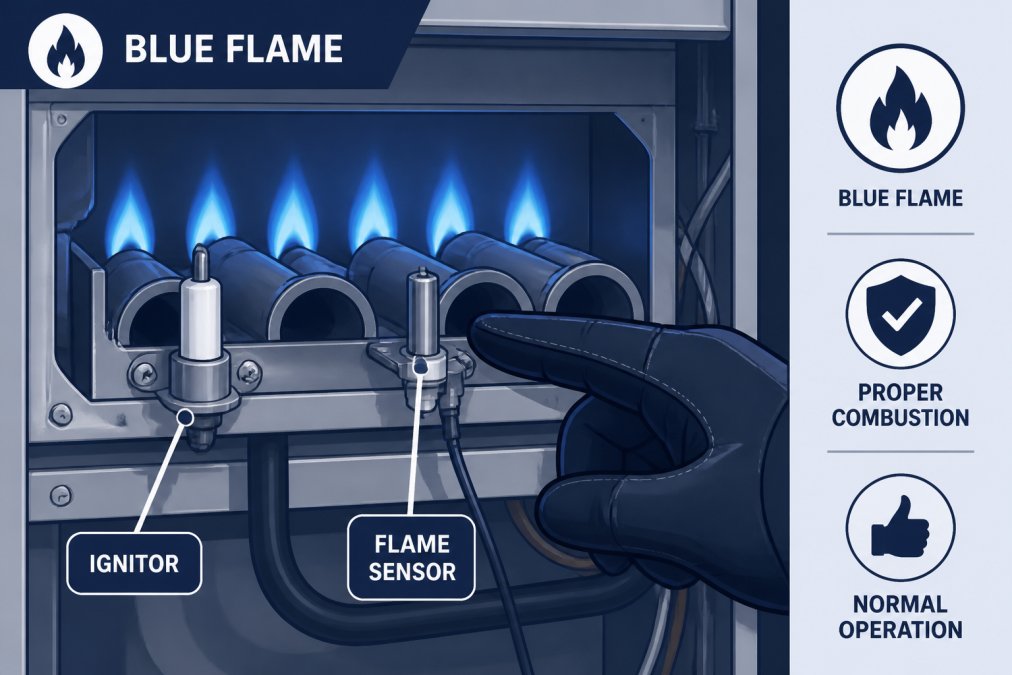
The color of your furnace’s pilot light or burner flame indicates whether combustion is working properly. A healthy furnace produces a clean blue flame. A yellow or orange flame indicates incomplete combustion, creating safety and efficiency problems.
Blue flame means complete combustion is occurring. The burner mixes gas and air in correct proportions, producing a hot, efficient flame.
Yellow or orange flame signals incomplete combustion. This happens when the burner isn’t receiving enough air or the gas-to-air ratio is off. Incomplete combustion produces carbon monoxide, a colorless, odorless, poisonous gas. It also reduces heating efficiency because the flame isn’t hot enough to transfer maximum heat to the heat exchanger.
Causes include a dirty burner, clogged air intake, or misaligned burner. Dust and debris accumulate on burner ports, restricting gas flow and preventing proper air mixing.
Never ignore a yellow flame. This is a sign you need furnace repair immediately. Install a carbon monoxide detector if you haven’t already. According to CDC guidance on carbon monoxide safety, carbon monoxide poisoning causes hundreds of deaths annually in the United States, many from heating system failures.
A professional technician can clean the burner, adjust the air intake, and verify that combustion is complete and safe. They’ll also test for carbon monoxide levels to ensure your home is safe.
A blue flame is healthy. A yellow or orange flame is dangerous. If you see anything other than blue, schedule service immediately and use a carbon monoxide detector in the meantime.
6. Frequent Repairs and Maintenance Calls
If you’re calling for furnace repairs multiple times per season, your system is failing. Frequent breakdowns mean money spent on repairs that could go toward replacing an aging system.
Most furnace repairs are one-time fixes for isolated problems. Frequent repairs, however, indicate systemic problems or a furnace approaching the end of its lifespan. When repairs cluster within a few months, the furnace is likely deteriorating. Each repair costs money, and none address the underlying aging of the system.
Keep records of every service call and repair. Track dates, costs, and what was repaired. If you’re spending more than a few hundred dollars per year on repairs, replacement often makes financial sense. A new furnace operates efficiently, comes with a warranty, and eliminates the stress of wondering when the next failure will occur.
At Anthony & Son Indoor Air Quality, LLC, our technicians can review your repair history and help you decide whether continued repairs or replacement makes sense for your situation.
Document every repair with photos, invoices, and dates. When deciding whether to repair or replace, this history is invaluable. It shows whether failures are random or part of a pattern of decline.
7. Your Furnace Is 15+ Years Old
Furnace age is one of the most important factors in deciding whether you need repair or replacement. Most furnaces are designed to last 15-20 years with proper maintenance. Once a furnace passes 15 years, failure becomes increasingly likely, and repair costs climb.
An older furnace operates at reduced efficiency. Modern furnaces achieve AFUE (Annual Fuel Use Efficiency) ratings of 90-98%. A 20-year-old furnace might operate at 70-80% efficiency, meaning higher energy bills and more frequent cycling.
Replacement parts for older furnaces become harder to find and more expensive. Manufacturers stop producing components for discontinued models. When a part fails, technicians may need to special-order it or recommend replacing the entire furnace.
The longer you keep an aging furnace, the greater the risk of catastrophic failure during the coldest part of winter. Emergency repairs cost more than planned replacements. Modern furnaces also improve indoor air quality with better filtration and ventilation, and integrate with smart thermostats for remote control and energy usage data.
If your furnace is 15+ years old, have a professional assess its condition. Knowing its remaining lifespan helps you plan and budget for replacement during mild weather rather than facing an emergency shutdown in winter.
Signs You Need Furnace Repair: When to Act
Recognizing signs you need furnace repair early prevents emergency breakdowns. Rising energy bills, strange noises, uneven heating, and ignition problems are all clear signals that your furnace requires professional attention.
Don’t delay on any of these issues. A small problem caught early often costs less to repair than a major failure. A dirty flame sensor cleaned during routine service costs far less than replacing a heat exchanger that cracked due to repeated ignition failures.
Carbon monoxide safety is non-negotiable. If you see a yellow pilot light, suspect combustion problems, or haven’t tested for CO in your home, act immediately. According to EPA information on carbon monoxide hazards, unvented or malfunctioning heating equipment is a major source of indoor carbon monoxide exposure. Install detectors in your home and have your furnace inspected by a certified technician.
Keep up with preventative maintenance. Many of these problems, clogged filters, dirty flame sensors, ductwork leaks, are preventable with regular tune-ups. A professional maintenance visit each fall costs far less than emergency repairs or premature replacement.
| Problem | Urgency | Typical Cause | Action |
|---|---|---|---|
| Rising energy bills | Medium | Reduced efficiency, dirty filter, ductwork leaks | Schedule inspection |
| Strange noises | High | Worn blower motor, loose parts, cracked heat exchanger | Call technician immediately |
| Uneven heating | Medium | Ductwork problems, thermostat placement | Professional assessment needed |
| No hot air | High | Ignitor failure, flame sensor problem | Emergency service required |
| Yellow flame | Critical | Incomplete combustion, carbon monoxide risk | Stop use, call technician, install CO detector |
| Frequent repairs | Medium | System deterioration, aging components | Evaluate repair vs. replacement |
| 15+ years old | Medium | Age-related decline, parts availability | Professional assessment recommended |
If you’re experiencing any of these signs you need furnace repair, don’t wait for the problem to worsen. Contact Anthony & Son Indoor Air Quality, LLC today for a professional assessment. Our certified HVAC technicians will diagnose the issue, explain your options, and recommend the most cost-effective solution, whether that’s a targeted repair or a complete system replacement. With our commitment to honest service and transparent pricing, you’ll know exactly what needs to be done and why. Learn more about furnace safety standards from the National Board of Boiler and Pressure Vessel Inspectors to understand what proper furnace operation looks like, then schedule your service appointment to ensure your home stays warm and safe all winter long.
Frequently Asked Questions
What are the most common signs you need furnace repair?
The most common signs include rising energy bills, strange noises like banging or squealing, uneven heating, a furnace not blowing hot air, a yellow pilot light instead of blue, frequent repair calls, and a system over 15 years old. Any of these warrant a professional inspection. A licensed HVAC technician can diagnose the exact issue and recommend whether repair or replacement makes sense for your situation.
How much does average furnace repair cost?
Average furnace repair costs vary widely depending on the component that needs fixing. A simple repair might cost less, while replacing a major part like a heat exchanger or blower motor costs significantly more. Contact Anthony & Son Indoor Air Quality, LLC for a transparent quote. We provide honest estimates upfront so you know exactly what to expect before any work begins.
When should I replace my furnace instead of repair it?
If your furnace is 15 or more years old, requires frequent repairs, or has a cracked heat exchanger, replacement often makes more financial sense than continued repairs. Compare the cost of repair versus replacement, and consider your system's energy efficiency rating (AFUE). Our team can help you evaluate whether repair or replacement is the better investment for your home.
Can a dirty air filter cause furnace problems?
Yes. A clogged air filter restricts airflow, forcing your furnace to work harder, which reduces efficiency, increases energy costs, and can trigger system shutdowns. Replacing your air filter every 1-3 months (depending on usage and pets) prevents many common issues. Regular maintenance keeps your furnace running smoothly and extends its lifespan.
Is a yellow pilot light dangerous?
A yellow or orange pilot light can indicate incomplete combustion, which may produce carbon monoxide, a colorless, odorless gas that's extremely dangerous. A blue flame is the sign of proper combustion. If you notice a yellow pilot light, stop using your furnace and call a professional immediately. Install a carbon monoxide detector as an extra safety layer in your home.
This article was written using GrandRanker